Intro to PCs
Introduction to Personal Computers for Beginners
Welcome
Welcome to Introduction to Personal Computers. I'm Richard Rost, your instructor. If you're a complete newcomer to computers, you're in the right place. We'll start from scratch, covering computer basics, hardware components, keyboard and mouse usage, and essential tips for beginners. Even if you've never touched a computer before, you're welcome here. No prerequisites are needed.
For those well-versed in tech, please consider sharing this course with friends, family, or co-workers who might benefit. Like all of my introductory courses, this one is completely free to all.
Resources
Watch Now For Free!
All of my Beginner Level 1 courses are absolutely FREE. Click on the Watch Now button to begin.

Topics Covered
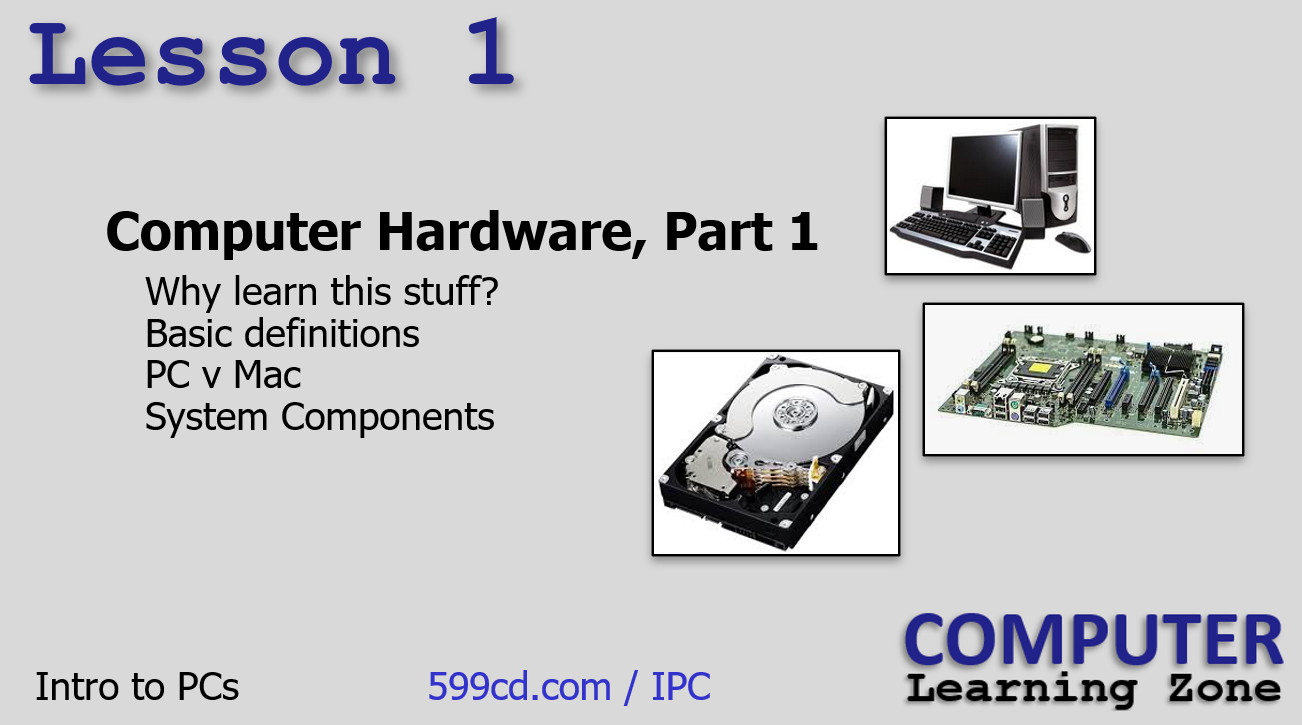
In Lesson 1, we will learn about computer hardware essentials. We'll cover everything from understanding why hardware knowledge is crucial, to exploring core system components like CPUs, memory, and storage options. We'll learn the difference between PC and Mac. I'll simplify complex terms such as the binary system, and provide practical tips on informed buying, servicing, and upgrading your system.
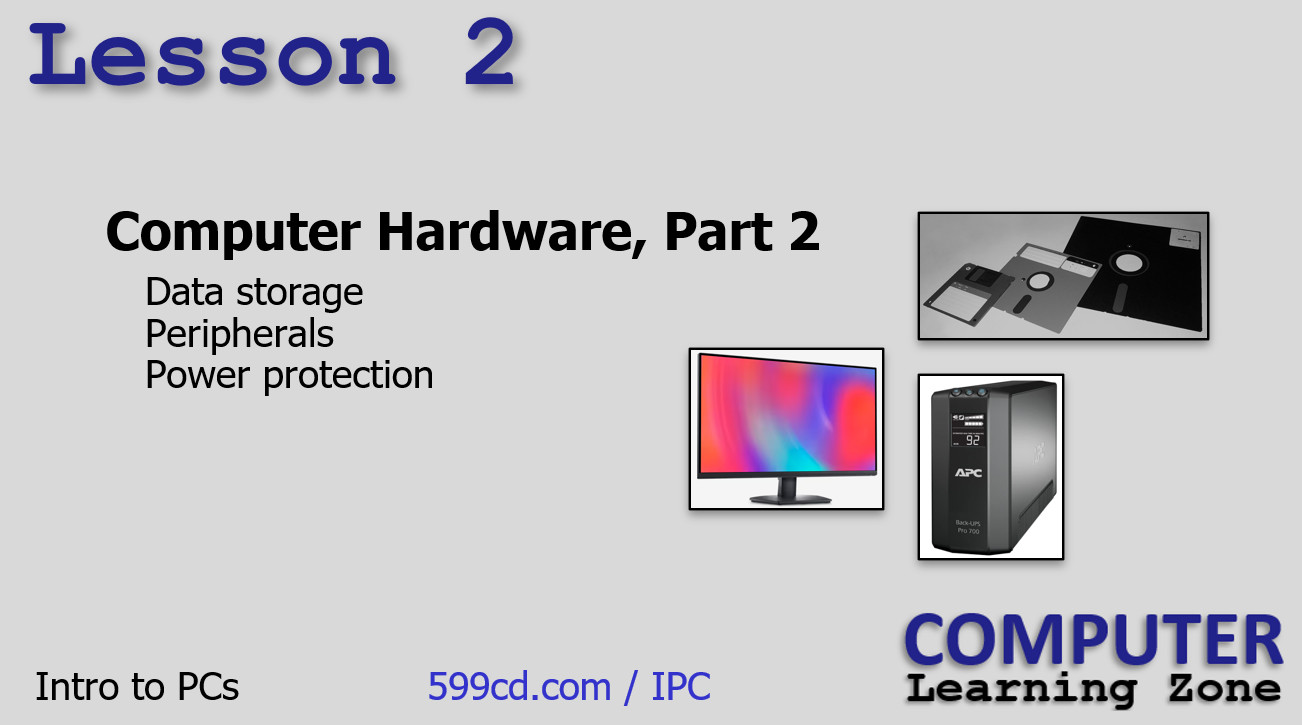
In Lesson 2, we will learn about data storage options from floppy disks to cloud services, use various peripherals such as printers and scanners, and understand power protection for your devices. Gain practical insights into evolving technology and how to best equip your computing setup.
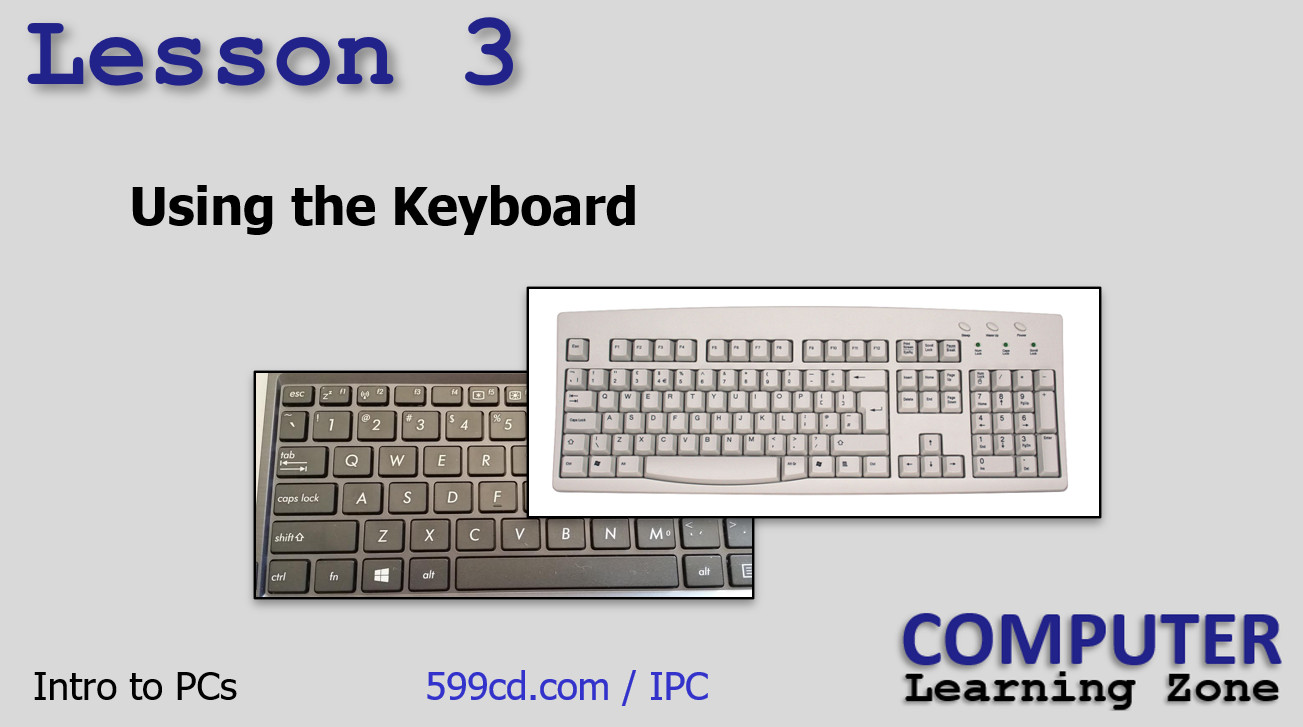
In Lesson 3, we will learn how to navigate and utilize your keyboard effectively, from mastering alphanumeric and symbol keys to function and modifier keys. We'll also explore the handy tools embedded in your keyboard like the space bar, backspace, numpad, and various system keys to enhance your productivity.
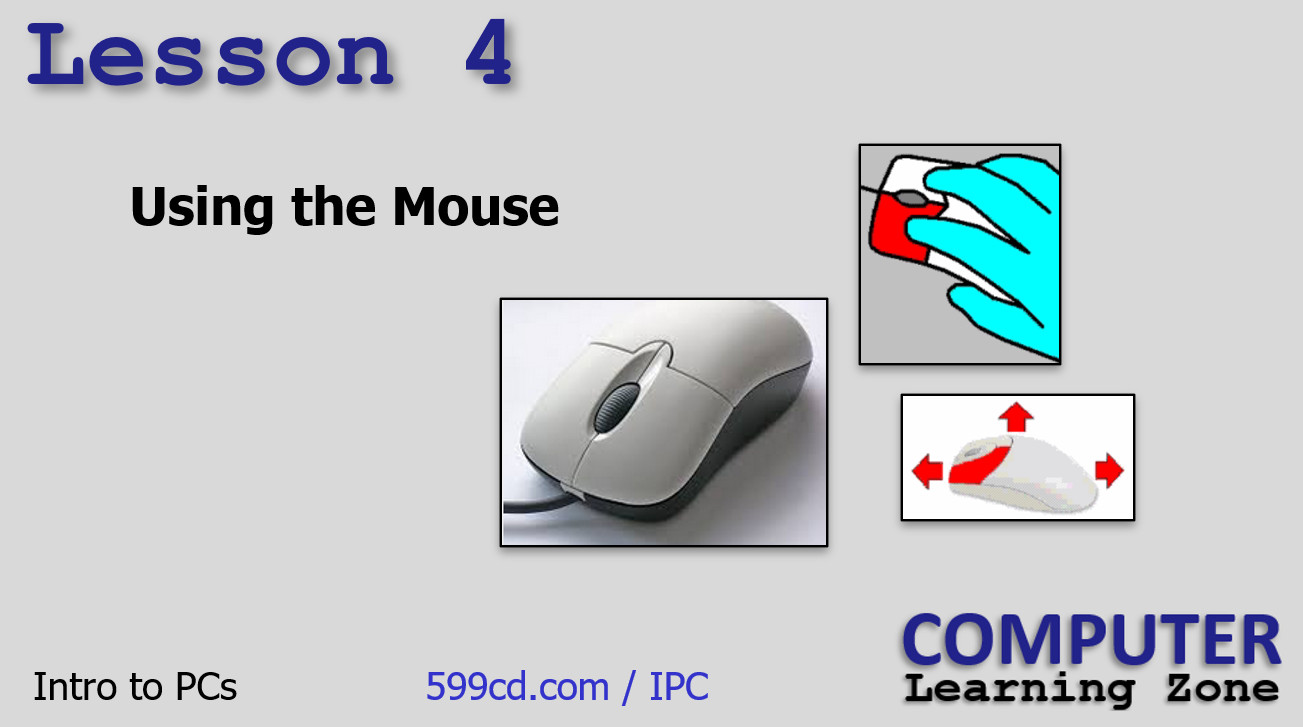
In Lesson 4, we will learn how to comfortably use a computer mouse, differentiate between the pointer and cursor, and master clicks, double-clicks, and drag-and-drop techniques essential for efficient navigation and interaction with your PC.
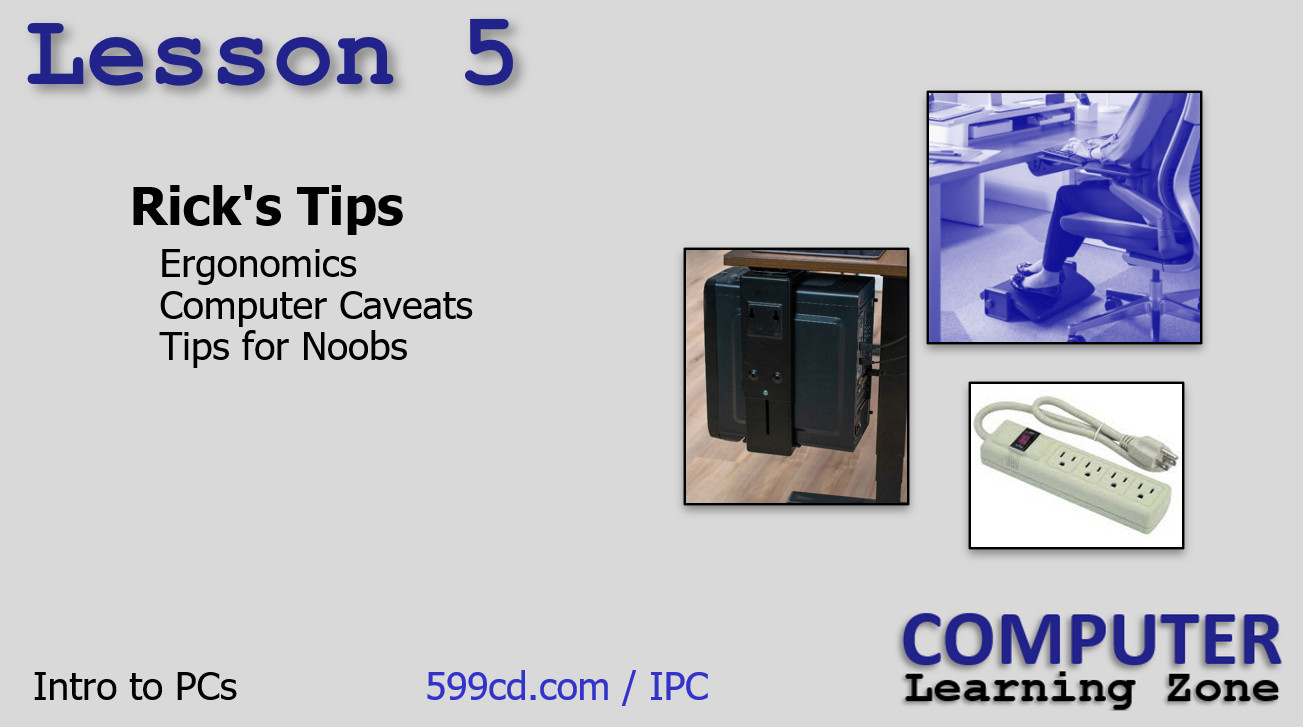
In Lesson 5, we will learn how how to optimize your workspace ergonomics and manage computer safety, with essential tips for protecting both your equipment and wellbeing, whether you're a beginner or a seasoned user. This is a lesson I call "Rick's Tips." Whether you're a seasoned user or just starting out, these insights will prove invaluable in ensuring your computing experience remains comfortable, efficient, and trouble-free. Additionally, we'll provide helpful tips tailored for newcomers, affectionately known as "noobs." This term is used endearingly and is meant to provide guidance to those taking their first steps in the digital world.
What's Next?
Windows Beginner Level 1 is currently still in production, but the first couple of lessons are posted and you can watch them right now.
Keywords
pc basics, computer basics, intro to pcs, computer hardware, system components, basic definitions, PC vs Mac, data storage, peripherals, power protection, using the keyboard, keyboard keys, using the mouse, ergonomics, computer caveats, tips for beginners, turning on a computer, internal components, keyboard usage, mouse navigation, tips for new users
 Subscribe to Intro to PCs
Get notifications when this page is updated
More InformationTranscript Welcome to Introduction to Personal Computers brought to you by ComputerLearningZone.com. I'm your instructor, Richard Rost. This course is for the absolute beginner who has little to no experience with personal computers.
I do not assume you know anything about computers. I know in today's day and age it is rare to find someone who has never used a computer before, but I know you are out there. I know you need help and have lots of questions about what many other people consider to be common knowledge, but you are not alone. This course is for you.
For the rest of you, please feel free to share this course with anyone you think might need it. The coworker who is constantly asking you PC questions, the neighbor next door who always needs help with his computer, or even your mom and dad who cannot figure out how to use the keyboard and mouse properly. This course is for those people. So even though you might not need it, keep it in mind for someone else who does.
There are no prerequisites for today's class. If you have never used a computer before, you will be absolutely fine. Today's class is going to focus on the basics of computer technology. We will learn some helpful definitions. We will discuss computer hardware in detail, including system components, peripherals, data storage, and more. We will learn all about how to use the keyboard and mouse and what a lot of those crazy keys on the keyboard are. Finally, we will talk about ergonomics, things to watch out for, and tips for beginners.
My next class, which is Microsoft Windows Beginner Level 1, will cover more of the software aspect of computers. Throughout my Windows series, we will learn more about basic software applications, using the Internet, file management, security, privacy, and all that kind of stuff. But today's class is for computer beginners who need the absolute basics.
So who am I? Why should you learn from me, and why should you listen to my advice? Let me share my background real quick.
I began using computers at the age of eight in 1980, so you can do the math. I have a long history with technology. I attended university right after high school for computer science, but I dropped out because I got bored. I started my first business in 1992, providing PC sales, service, networking, and custom software development. My customers were constantly asking where they could go to learn how to use the computers I just sold them, so I decided to open my own in-person computer training center in 1997.
I ran the training center for a few years before transitioning to online training. With more and more people getting high-speed internet, I could record videos and reach a much broader audience. I have been dedicated to online training since 2002.
In 2010, I was approached by a book agent who found my Excel lessons on YouTube, leading to the publication of The Complete Idiot's Guide to Excel 2010. I received the Microsoft MVP Award for Microsoft Access, which is my personal specialty, in 2013, 2014, and again in 2023.
That is a brief overview of my professional background. As you can see, I have over 30 years of experience as a computer professional, and I have been teaching software applications for most of that time. So if you need to learn how to use a computer, I am your guy.
Plus, I am all about having fun. I do my best to keep my videos light and entertaining, so sit back, relax, and enjoy.
Now, before we get started with lesson one, if you have any questions regarding the material covered in today's class, and you are watching this course on my website, just scroll down to the bottom of the page and post your questions there. I have a fantastic group of volunteer moderators who love answering questions from students just like you. Also, take a minute to read through any other questions that have been posted as your question may have already been answered.
Make sure you click on that red subscribe button to get notified of any other questions or comments posted for this class. If you are watching this video on YouTube, you can still post your questions and comments - just scroll down to the comments section. I do not check YouTube as often as I check the comments on my own site, but I do try my best to read and respond to them as often as I can.
Now let us take a closer look at exactly what is covered in today's class.
In lesson one, we are going to learn about computer hardware. First, we are going to discuss why you should learn this stuff. Why should you learn about computer hardware? You are just going to turn the computer on, it works. Why do you have to learn about what is inside it? We will talk about that first.
We will go over some basic definitions. We will talk about PC versus Mac. Then we will talk about the different system components that are inside your computer.
In lesson two, we are continuing to learn about computer hardware. We are going to talk about data storage, peripherals, and power protection.
In lesson three, we are going to talk about using the keyboard. We will learn about what all the different keys on the keyboard are and those little lights, and we will learn how to use most of them.
In lesson four, we are going to talk about using the mouse.
Lesson five is something I call RixTips. I was going to call it Richard's Tips because I do go by Richard professionally, even though my friends and family call me Rick. You can call me Rick if you want, but RixTips sounded better than Richard's Tips, so we are going to go with RixTips.
We are going to talk about ergonomics, computer caveats, things you have to watch out for, and tips for noobs. Yes, new computer users are called noobs. It is a term of endearment. We do not mean any insult by it. That is what we are going to talk about in lesson five. Intro In this video, you will get a gentle introduction to personal computers, perfect for absolute beginners with little or no experience. We will talk about computer hardware basics, basic definitions, the differences between PCs and Macs, essential system components, data storage, and peripherals. You will learn how to use the keyboard and mouse, and we will cover ergonomics, important things to watch out for, and helpful tips for new users. This tutorial is designed to be accessible and easy to follow for anyone who needs to start with the basics. Quiz Q1. Who is the intended audience for this "Introduction to Personal Computers" course?
A. People who already know a lot about computers
B. Absolute beginners with little to no computer experience
C. Only computer science students
D. Only business professionals
Q2. What topic will be the primary focus of today's class?
A. Advanced networking
B. Internet security
C. Computer basics and hardware
D. Software development
Q3. According to Richard, why is it valuable to know about computer hardware even for beginners?
A. So you can repair your own computer
B. Understanding hardware helps you use computers more effectively
C. So you can build a computer from scratch
D. To qualify for technical support jobs
Q4. Which of the following topics will NOT be covered in today's class but will be covered in the next course?
A. Computer hardware
B. Software applications and the Internet
C. Using the mouse
D. Data storage
Q5. What is "RixTips" as described by the instructor?
A. A lesson about software installation
B. Richards collection of ergonomic and noob tips for beginners
C. A troubleshooting tool provided with the course
D. A hardware component
Q6. What should students do if they have questions about the material and are watching on ComputerLearningZone.com?
A. Contact the instructor directly by email
B. Ignore their questions
C. Scroll to the bottom of the page and post in the Q&A section
D. Post their questions only on YouTube
Q7. Which of the following is a main lesson covered in the class?
A. Programming in C++
B. Using the keyboard and mouse
C. Setting up a server farm
D. Repairing smartphones
Q8. What is the purpose of reading through previously asked questions in the Q&A section?
A. To find topics for new videos
B. To see if your question has already been answered
C. To practice typing
D. To criticize other students
Q9. What does the instructor recommend regarding the "red subscribe button"?
A. Ignore it
B. Click it to get notified of questions and comments
C. Only click it after completing the course
D. Use it to download course material
Q10. What term does the instructor say is used "with endearment" for new computer users?
A. Hackers
B. Geeks
C. Noobs
D. Wizards
Answers: 1-B; 2-C; 3-B; 4-B; 5-B; 6-C; 7-B; 8-B; 9-B; 10-C
DISCLAIMER: Quiz questions are AI generated. If you find any that are wrong, don't make sense, or aren't related to the video topic at hand, then please post a comment and let me know. Thanks. Summary Today's video from Computer Learning Zone covers the Introduction to Personal Computers. I created this course with the absolute beginner in mind, for those who have little or no experience using personal computers.
I do not assume you have any background or previous knowledge about computers. Although it may be uncommon these days to find someone who has never used a computer before, I know there are people out there who need guidance in an area that many now regard as basic knowledge. If you are one of those people, you are not alone, and this course is designed specifically for you.
For others who may already be comfortable with computers, keep in mind that you likely know someone who could benefit from this material. Maybe it is a coworker who regularly seeks your help with their PC, the neighbor who always needs advice, or even a family member like a parent who struggles with basic functions like using the keyboard and mouse. Please share this course with anyone who might need it.
There are no prerequisites for this class. If you have never used a computer, you will be fine. This course will focus only on the fundamentals of computer technology. We will cover some essential terms, take a detailed look at computer hardware, including system components and peripherals, as well as data storage and other related areas. There will be a section on using the keyboard and mouse, breaking down what all those unfamiliar keys are for. At the end, I will discuss ergonomics, potential pitfalls, and tips for those who are just getting started.
My next course, Microsoft Windows Beginner Level 1, will start to explore software topics in more depth. That series covers applications, using the Internet, managing files, security, privacy, and many other software-related topics. Today, though, we are concentrating entirely on the very basics for those brand new to computers.
To give you some idea of my credentials, I began using computers in 1980 at eight years old. I went to university for computer science but left after a while, realizing a more hands-on approach suited me better. In 1992, I started a business in PC sales and support, networking, and custom software development. I quickly realized my customers often needed direct training, so in 1997, I opened my own in-person training center. A few years later, seeing how the internet made learning more accessible, I moved to online video training, which has been my focus since 2002.
In 2010, a book agent noticed my Excel lessons on YouTube, which led to my book The Complete Idiot's Guide to Excel 2010. I have also received the Microsoft MVP Award for Microsoft Access multiple times. Over the past three decades, teaching software applications and making computers easier to understand has been my main pursuit.
I also believe that learning should be enjoyable. My goal is to keep things light and entertaining, so sit back and enjoy.
If you have questions about what is covered in the class, and if you are watching from my website, you can scroll down to the bottom of the page to post your questions. I have a team of dedicated volunteers ready to answer. Please check through existing questions as well, since yours might have already been answered.
To stay up to date on questions and comments about this course, simply subscribe using the option on my site. If you are on YouTube, you can use the comments section there. I check my site more frequently than YouTube, but I try to respond to both whenever I can.
Let me outline what we will cover in this course:
Lesson one focuses on computer hardware, starting with the reasons why it is important to know about hardware, even if you just want to turn the computer on and use it. We will clarify some common definitions and discuss the difference between PC and Mac. I will also review the main system components inside your computer.
In lesson two, we will go deeper into hardware topics, specifically data storage, peripherals, and protecting your equipment from electrical issues.
Lesson three will cover using the keyboard, including what each key does, what those indicator lights mean, and how to use them efficiently.
Lesson four will introduce you to using a mouse.
Lesson five is what I call RixTips (a play on my name, since I go by Rick with family and friends, but Richard professionally). These tips will cover ergonomics, common pitfalls, and other advice for new users. The term "noob" comes up here as a friendly label for new users, and it is not meant to be insulting.
For a complete video tutorial with step-by-step instructions on everything covered here, visit my website at the link below. Live long and prosper, my friends. Topic List Why learn about computer hardware
Basic computer terms and definitions
PC vs Mac comparison
Identifying system components
Understanding data storage devices
Overview of computer peripherals
Importance of power protection
Using the keyboard and its keys
Keyboard lights and functions
How to use the mouse
Ergonomics for computer users
Common computer caveats for beginners
Practical tips for new computer users Primary Topics computer hardware basics, system components, PC vs Mac, peripherals, data storage, keyboard use, mouse use, ergonomics Secondary Topics power protection, terminology, computer caveats, tips for beginners |