|
||||||

|
|
||||||
|
Access OnlineShare Your Microsoft Access Database Online I get asked this question all the time: "How can I put my Access database online so other people can use it?" There are several different things you can do to put your database online, depending on who your users are, what kind of security you need, how much work you want to put into development, and what you want the end-result to look like. File Sharing ServicesFirst of all, a lot of people tell me they are trying to share their Access database using Google Drive, OneDrive, or Dropbox. Do not do this! This is a big no-no! Access databases will not work reliably over these file sharing services. You will most likely lose information at best, and corrupt your database at worst. Very bad. I love Google drive. I use it all the time myself, but don't use it for an Access database. If you are the ONLY user working on the database AND it's relatively small AND you have good Internet, and you want to be able to copy the database back and forth between your home and your office, that's OK. But don't run the database out of your shared folder. Copy it to a local drive, use it, then copy it back up. See this video for more information: Using Access with File Sharing Services. SharePoint
SQL Server Online
New: Power Apps
Remote Desktop
Access Database Cloud
Access Form Profiles
You can use the same database on your big monitor, your small travel laptop, and your cell phone. All by setting up different form profiles.
Additional InfoIf you require additional copies of Microsoft Access for your users to work with your database, you don't need to pay for full versions of Office. You can just get the free Access Runtime Edition. If you're planning on using one of the remote desktop options, and you want to learn how to design Access forms so that they appear the right size for your tablet or cell phone, check out my Access on a Phone video. If you are planning to use SQL Server to host your data, in addition to connecting your Access front-end database to it, you can also connect your web site as well. I have a full series of classes that teach web programming using Active Server Pages. That's what my web site uses, and my site is very heavily database-driven. Access Web AppsAny time people ask about using Access online, this topic always comes up: Access Web Apps. As of 2019, Microsoft removed Web Apps from Access. If you see any web sites talking about them, they're dead. They were never very good to begin with. And be careful what you read out there. There are some misleading sites that are claiming that Microsoft has discontinued Access and will no longer be supporting it. No. That's not true. They discontinued Access Web Apps which was one feature of Access. Access isn't going anywhere. My RecommendationsI only recommend SharePoint if you're already setup with it and using it. If you want to use Access as a desktop database and also to share data on your web site, use SQL Server. If you, and you alone, want to use your database when you're travelling and you don't mind leaving your home/office computer on while you're away, use Chrome Remote Desktop. If you want to share your database with your employees but don't want to have to migrate your data or learn how to work with SharePoint or SQL Server, then I recommend the fully managed Access Database Cloud service. If your users want to have remote connectivity via a web browser, tablet, or phone, use Chrome Remote Desktop if they can connect in to their home/office PCs, or Access Database Cloud if you want to have your database online. If your database needs full-scale public access, with user account creation, logons, shopping carts, and the works, then I recommend an ASP Web Site with SQL Server. What do I use? When I'm on the road and I want to get into my database, I use Chrome Remote Desktop. I can use my laptop or Android phone/tablet. For my web site, I use an ASP Web Site connected to SQL Server. I love to program in ASP. It's fast, easy (for me), and secure. However, I'm just a lone gunman, and I'm a nerd. I don't have any employees. I don't work in a team. I love to program. So it's easy for me to just leave my home PC running when I'm travelling so I can connect into it. However, if I was just a normal business owner, I wasn't a database guru, I had employees, and needed to share my database with a team, I'd use Access Database Cloud. But that's just my opinion. I've only been doing this for... about 30 years. :) Practical Case StudyMost emails I get from people asking me what they should do tend to go something like this: "I have a database to run my business. I need to be able to share it with people who work remotely. What's the best way to set something like this up?" Here are the three solutions I recommend for most situations:
What option is best for you depends mostly on your budget and how much time and effort you're willing to spend on learning Access, SQL Server, ASP, and whatever else is necessary. I've got the courses to teach you all of this, but you have to ultimately decide what's best for you. Your Comments & QuestionsIf you are interested in learning more about any of the topics mentioned above, then leave a comment below and let me know exactly what your needs are. The more people that comment, the higher the priority I give specific topics.
More InformationTranscriptThis is Richard Rost from AccessLearningZone.com. I get asked this question all the time. How can I put my Access database online so other people can use it? There are several things you can do to put your database online, depending on who your users are, what kind of security you need, how much work you want to put into development, and what you want the end result to look like. First of all, a lot of people tell me they're trying to share their Access database using Google Drive, OneDrive, Dropbox, or one of those types of file sharing services. Do not do this. This is a big no-no. Access databases will not work reliably over these types of file sharing services. You will corrupt your database. Very, very bad. I love Google Drive. I use it all the time myself, but don't use it for an Access database. If you are the only user working on the database, and it's a relatively small database, and you have good internet, and you want to be able to copy the database back and forth between your home and office, for example, that's okay. But don't run the database out of your shared folder. Copy it to a local drive, use it, then copy it back up. Do not try to share an Access database using one of these services. Now, if you have a small team of trusted users, and you're already online using SharePoint, then this might be a good solution for you. You'll split your database, migrate your tables over to SharePoint lists, and you can continue to use your Access front-end locally. This method does involve a moderate amount of setup work to get your tables transferred over, and you may have to make modifications to your front-end to get it to work. I've got an hour-long SharePoint seminar that covers how to do this, but again, I only recommend this for organizations who are already set up using SharePoint. Plus, if you're planning on taking your data public at any point, such as feeding a website, then this solution isn't the best one for you. Another option is to migrate your database to SQL Server online. You'll split the database, upload your tables to the server, and continue to work with your Access front-end file. You can have a very large number of people connected to your database at the same time, so this is a good solution for even the largest organizations. This is also a great solution for anyone who wants to have a public-facing database. You can distribute a secured front-end to your suppliers or your customers, or even use your database to power a website and build a browser-based interface in a web language like ASP. This solution does require a significant amount of time to set up your database, and it has a steep learning curve. I've got a four-hour seminar to teach you everything you need to know called the Access SQL online seminar. Now, if you want to be able to use your Access database without making any changes to it, and you don't mind leaving your office computer running 24-7, then you can use a remote desktop solution to log into your computer remotely. I personally prefer Google's Chrome Remote Desktop. I use this myself when I'm traveling. I've got a free lesson that explains how to set it up. However, this is really only good for one user at a time. You can't share the database unless it's already shared on your office network, and even in that case, all of those users will also need to leave their computers running so that they can log in. This is best for a single user remote solution. If you want to have your entire team be able to access your database simultaneously from remote locations, with little to no setup on your part, I recommend Access Database Cloud. This is an online service specifically tailored to Microsoft Access users who want to set up a shared solution so that your entire team can work with your database remotely 24-7 from anywhere in the world. As long as you've got an internet connection, you can share your Access database. Once your account is set up, there is almost zero setup time for you to get up and running. You just copy your existing Access database file up to a shared folder and begin working. This is a fully managed solution and it's great for sharing your database amongst your employees. The only downside is that there is a per user fee. However, it's still a very affordable solution for a business that wants a fully managed server that's easy to operate with little to no setup time or learning curve. Some additional notes: if you require additional copies of Microsoft Access for your user to work with your database, you don't need to pay for full versions of Office. You can just get the free Access runtime edition. If you're planning on using one of the remote desktop options and you want to learn how to design Access forms so they appear the right size for your tablet or cell phone, check out my Access on a phone video. If you are planning to use SQL Server to host your data, in addition to connecting your Access front-end database to it, you can also connect your website as well. I have a full series of classes that teach web programming using Active Server Pages (ASP). That's what my website uses and my site is very heavily database driven. Now, anytime people ask about using Access online, this topic always comes up: Access web apps. As of 2019, Microsoft removed web apps from Access. If you see any websites talking about them, they're dead. They were never very good to begin with. And be careful what you read because there are some misleading websites claiming that Microsoft has discontinued Access altogether and will no longer be supporting it. That's not true. They discontinued Access web apps, which was only one feature of Access. Access is not going anywhere. If you're curious, I got a whole video on the subject. So what are my recommendations? First, I only recommend SharePoint if you're already set up with it and using it. If you're not already using SharePoint, don't even consider it. If you want to use Access as a desktop database like you've always been doing and also share your data on your website, use SQL Server. If you and you alone want to use your database while you're traveling and you don't mind leaving your home office computer on while you're away, use Chrome Remote Desktop. If you want to share your database with your employees, but don't want to have to migrate your data or learn how to work with SharePoint or SQL Server, then I recommend the fully managed Access Database Cloud service. Very easy to use. If you want your users to have remote connectivity via a web browser, tablet, or phone, use Chrome Remote Desktop if they can connect into their home or office PCs where the Access database is already running, or use Access Database Cloud if you want to have your database online. If your database needs full-scale public access with user account creation, log-ons, a shopping cart, and the works, then I recommend an ASP website with SQL Server. That's exactly what I use on my website. What do I use personally? When I'm on the road and I want to get into my database, my Access database in the office, I use Chrome Remote Desktop. I can use my laptop, my Android phone, or my tablet. For my website, I use an ASP website connected to SQL Server. I love to program in ASP. It's just like Visual Basic. For me, it's fast. It's easy and it's secure. However, I'm just a lone gunman. I don't have any employees and I don't work on a team. So it's easy for me to just leave my home PC running when I'm traveling so I can connect into it. However, if I wasn't a database guru (I'm a nerd) and if I had employees and needed to share my database with a team, I'd use Access Database Cloud. As a business owner, if I didn't want to get involved with setting up SQL Server and all that crazy tech stuff, Access Database Cloud is the easiest solution by far. But that's just my opinion. And I've only been doing this stuff for about 30 years now. So take it or leave it. So that's it. There you go. That's how you can use your Microsoft Access database online. I hope this video was helpful to you. And of course, if you have any questions, feel free to post them down below. Thanks for watching. We'll see you next time. IntroIn this video, we'll talk about the different options for putting your Microsoft Access database online so multiple users can work with it remotely. We'll cover the pros and cons of using file sharing services like Google Drive and OneDrive, setting up SharePoint, migrating to SQL Server, using remote desktop connections such as Chrome Remote Desktop, and managed solutions like Access Database Cloud. You'll learn which options are best for your needs, including situations where you want to keep your current database setup, share it with your team, or connect your database to a public-facing website. QuizQ1. Why should you NOT use Google Drive, OneDrive, or Dropbox to share an Access database with multiple users? A. Because these services will corrupt your Access database during multi-user access B. Because they do not support any kind of file storage C. Because they are only compatible with SQL databases D. Because they have limited file size restrictions Q2. What is an acceptable way to use Google Drive with your Access database if you are the only user? A. Run the database directly from the shared folder B. Only copy the file back and forth between computers, using it locally each time C. Always use Google Drive in offline mode D. Convert the Access database to a PDF file Q3. When might using SharePoint be a good solution for putting your Access database online? A. If your organization already uses SharePoint and has a small, trusted team of users B. If you want to go public immediately C. If you are working completely offline D. If you want a free solution for very large databases Q4. What is one major downside of migrating your Access database to SQL Server online? A. There is a steep learning curve and it requires more setup time B. You cannot support multiple users C. Access databases cannot connect to SQL Server tables D. SQL Server is not secure in any way Q5. What is the primary limitation of using a remote desktop solution like Chrome Remote Desktop for Access? A. It typically only allows one user to access the database at a time B. It does not allow remote access at all C. It requires a SharePoint server D. It can only be used on Mac computers Q6. What is the main advantage of the Access Database Cloud service? A. It is very easy to set up and allows your entire team to work with the database remotely B. It is a free service for all users C. It only works for single-user databases D. It is limited to local network access only Q7. What kind of licensing do you need if your users require Access to work with your database, but you do not want to purchase full versions of Office? A. Access Runtime edition, which is free B. You need the full professional version of Office C. You must purchase the SQL Server Enterprise license D. You must use only web browsers to access the files Q8. What happened to Access web apps as of 2019? A. Microsoft discontinued Access web apps, but not Microsoft Access itself B. Microsoft improved and expanded Access web apps C. Access web apps became required for all data access D. Microsoft discontinued all support for Access as a program Q9. Which solution does the video recommend for someone who wants full-scale public access, user accounts, and website integration? A. An ASP website with SQL Server backend B. Google Drive with Access database files C. Remote Desktop solution for every user D. SharePoint with Access web apps Q10. If you want a simple, fully managed online solution for sharing your Access database with your team, what is the best choice according to the video? A. Access Database Cloud B. Google Drive shared folder C. SharePoint (if you are not using it already) D. Build a custom ASP.NET application Q11. If you are the only user and want to access your database while traveling, which solution is recommended? A. Chrome Remote Desktop B. SQL Server migration C. Dropbox file sharing D. ASP programming Answers: 1-A; 2-B; 3-A; 4-A; 5-A; 6-A; 7-A; 8-A; 9-A; 10-A; 11-A DISCLAIMER: Quiz questions are AI generated. If you find any that are wrong, don't make sense, or aren't related to the video topic at hand, then please post a comment and let me know. Thanks. SummaryToday's video from Access Learning Zone covers one of the most common questions I receive: how can you put your Microsoft Access database online so that multiple people can use it? There are several solutions, and the right choice depends on who needs access, your security needs, how much development effort you are willing to invest, and the type of end user experience you are looking for. Let me start by warning you about a mistake many people make. Some try to share their Access database over services like Google Drive, OneDrive, or Dropbox. You should not do this. These file-sharing platforms are not designed to handle Access databases being worked on by multiple users at once. This can easily result in a corrupted database, which can cause significant problems. While I use Google Drive personally for many types of files, I do not recommend using it to run an Access database. If you are the sole user and just want to move the file between your home and office, that is fine, but you should copy the file to your local drive before opening it and then upload it again afterward. Never run the database straight from the shared folder, and definitely do not allow multiple people to access the file in this way. If you are already using SharePoint and have a small group of trusted users, SharePoint might be an appropriate solution. With this option, you will split your database and migrate your tables to SharePoint lists. The Access front-end will continue to run on users' computers, but now it connects to SharePoint online for the data. While this can work well for certain organizations, it does require some initial setup and tinkering with your front-end. I have an in-depth seminar on using SharePoint with Access, but I only suggest this route if you already use SharePoint. This is not a good choice if you want to make your data available to the public or use it to power a website. Another robust solution is migrating your data to SQL Server online. You will split your database and move the tables to SQL Server, while still using Access as your front-end application. This setup can handle a very high number of users at the same time and is suitable for large organizations or those who need a public-facing database. It also allows you to distribute a customized front-end to customers or suppliers, or to connect the data to a website built using a web framework such as ASP. However, setting up SQL Server requires considerable time and technical knowledge. I offer a four-hour seminar that teaches everything you need to know about using Access with SQL Server online. Perhaps you do not want to change your Access database at all, but you still want to get to it from a remote location. If you are willing to leave your office computer running all the time, you can use a remote desktop service to access your machine from elsewhere. I personally use Chrome Remote Desktop for this purpose and recommend it for single-user remote connectivity. This solution is not ideal for teams, since it only allows one user to use the remote desktop at a time unless you have the database shared locally in your network, which complicates things further. If you want your whole team to access your database remotely, and you would rather avoid the hassle of setup and learning about SharePoint or SQL Server, you might consider an online service like Access Database Cloud. This service is specifically for Access users who want a shared, cloud-based solution. After setting up your account, you simply upload your Access database file to their system and your team can begin working with minimal setup. This is a managed service, so it is very user-friendly. The only real downside is a per-user fee, but it remains affordable for most businesses that want a managed, easy-to-operate shared Access environment. Here are a few additional points. If you need extra copies of Access so your users can open the database, you do not have to buy the full version of Microsoft Office for each machine. You can use the free Access runtime edition. If you are considering a remote desktop solution and want to optimize your database forms for tablets or phones, you might want to see my lesson on designing Access for mobile devices. For those interested in connecting a website directly to a SQL Server database, this can also be done alongside your Access front-end. I have a full series of classes on building web solutions with Active Server Pages (ASP), which is actually the technology my own website is built on. Whenever people ask about putting Access online, I always hear questions about Access web apps. Microsoft discontinued this feature in 2019. If you come across websites referring to Access web apps, know that they are obsolete and no longer supported. Some websites even mislead people into believing Microsoft has stopped development of Access altogether, but that is not true. Microsoft only discontinued Access web apps, not Access itself. Let me summarize my recommendations. Use SharePoint only if you are already using it in your organization. If you want to continue using Access as a desktop database and also share data publicly or on a website, SQL Server is a solid choice. For remote access to your database when you are traveling, Chrome Remote Desktop is a good single-user solution. If you want a simple, managed solution for sharing your database with multiple employees without migrating your data or learning new systems, Access Database Cloud is an excellent option. For web-based data access requiring user logins and public-facing features, I suggest building an ASP website backed by SQL Server, just like I do for my own business. Personally, I use Chrome Remote Desktop to access my database when I am traveling and rely on an ASP website connected to SQL Server for all of my web-based needs. It fits my workflow since I work alone, but if I needed to collaborate with a team I would look to Access Database Cloud as the simplest and most effective managed solution. That covers the main ways you can put your Access database online and share it securely. For a complete, step-by-step video tutorial on all these options, visit my website at the link below. Live long and prosper, my friends. Topic ListWhy not to use file sharing services for Access databases Copying databases between computers using cloud storage Sharing Access databases with SharePoint Migrating Access tables to SharePoint lists Using Access as a front-end for SharePoint data Migrating Access databases to SQL Server online Splitting an Access database for SQL Server Distributing secured Access front-end files Using SQL Server and Access for public-facing databases Building browser-based interfaces with ASP Using remote desktop solutions to access Access databases Setting up Chrome Remote Desktop for Access Limitations of remote desktop solutions for multiple users Using Access Database Cloud for shared online access Setting up Access Database Cloud for teams Access runtime edition for additional users Designing Access forms for tablets and phones Connecting Access databases and websites to SQL Server Access web apps discontinuation and alternatives Recommendations for various online Access solutions Comparing SharePoint, SQL Server, Cloud, and Remote Desktop Using ASP sites with SQL Server for public access Primary Topicsputting Access online, database sharing, SharePoint integration, SQL Server migration, Access Database Cloud, remote desktop solutions Secondary TopicsAccess runtime, web programming with ASP, Access form design for mobile devices |
||||||||||||||||||||||||||||||||||||||||||||||||||||||||||||||||||
|
| |||
| Keywords: access web database online sharing shared sharepoint hosted sql server amazon workspaces remote access virtual pc access over the internet access on the web onedrive google drive dropbox PermaLink How to Share Your Microsoft Access Database Online |
 If you have a small team of trusted users, and you're already online using SharePoint, this this might be a good solution for you. You will split your database, migrate your tables over to SharePoint lists, and you can continue to use your Access front-end locally. This method does involve a moderate amount of setup work to get your tables transferred over, and you may have to make modifications to your front-end to get it to work right. I've got an hour-long
  Another option is to migrate your database to SQL Server online. You'll split the database, upload your tables to the server, and continue to work with your Access front-end file. You can have a very large number of people connected to your database at the same time, so this is a good solution for even the largest organizations. This is also a great solution for anyone who wants to have a public-facing database. You can distribute a secured front-end to your suppliers or customers, or even use your database to power a web site and build a browser-based interface in a web language like
 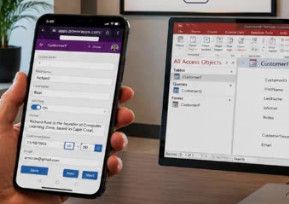 Once you've got your data online, whether it's in SQL Server or SharePoint, another option is to build a simple web and mobile interface using
  Now, if you want to be able to use your Access database without making any changes to it, and you don't mind leaving your office computer running 24/7 then you can use a remote desktop solution to log in to your computer remotely. I personally prefer Google's
  If you want to have your entire team be able to access your database simultaneously from remote locations with little to no setup work on your part, I recommend
 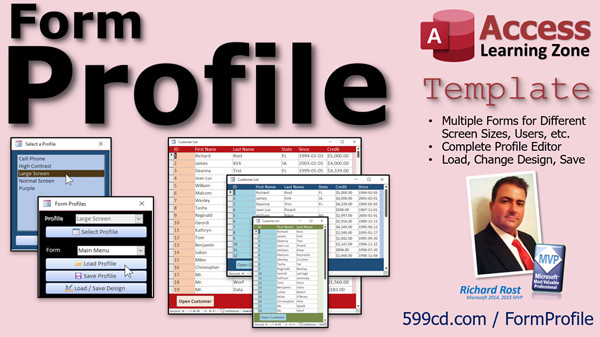 If you're going to use either Remote Desktop or Access Database Cloud on PCs with different screen sizes or even mobile devices, you may want to consider my


