Too many people, myself included, try to take on too much at once. It is easy to fall into the trap of thinking you can do it all, but the reality is that spreading yourself too thin only leads to exhaustion and mediocrity.
When I first started my business, I wanted to do everything for my customers. I sold computers, built custom software, and provided training. If a customer needed something, I wanted to be the one to handle it. Back then, customers were scarce, and saying no to work felt like turning down an opportunity.
But over time, I realized that trying to do everything meant I was not excelling at any one thing. That is why I eventually stopped offering consulting services. While I could build software and troubleshoot databases, I recognized that my true strength was in teaching. By focusing on education, I have been able to help far more people than I ever could through one-on-one consulting.
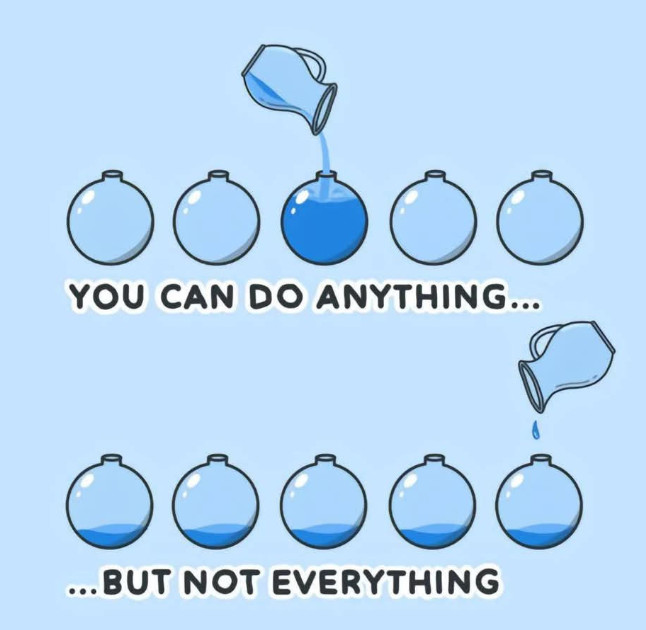
The lesson here is simple. You can do anything, but not everything. If you try to please everyone, you end up pleasing no one, including yourself. Find that one thing you do better than anyone else and commit to it.
Yeah, these people that think they can multitask and do 5 things at once are full of crap. Instead of focusing on one thing at a time and finishing that task, you're doing 5 things mediocrely and not doing any of them very well.
But then again, I'm not one to talk. My Windows desktop is littered with at least two dozen shortcuts to Access databases where I started building something cool, figured out that I could do it, built a proof of concept, and then got bored with it and moved on to something else. So, I have a problem with not finishing things too.
You know the old saying, though, right? Do as I say, not as I do. LOL.
Thomas Gonder
@Reply 18 months ago
Nothings says you have to finish a proof of concept. The whole purpose was to prove it could be done, not do it.
I prove a lot of things, then think about them, and say "naw", and work to find a better way.
I think for every step forward, I go back and fix two old steps that weren't "good enough".
Matt Hall
@Reply 18 months ago
What Thomas said and with the proof, you have learned a technique that works and that can be implemented at any time in the future. There are lots of projects that I have started but not finished. Sometimes the learning portion of the project is more interesting than the completion. It usually comes down to the ever-changing priorities in my life.
You are completely correct on the multitasking topic. There are a ton of interesting articles like this one on the topic.
Yeah, but my thing with making proof of concepts is that I often wonder if something can be done with Microsoft Access, and then once I figure out that it can be done, I have to decide if it's something that I can make into a marketable product. I've got so many tons of databases that I've started that I figure out that I can do it, but I don't think it's that marketable. Or I do finish it and make it an actual template, and it doesn't sell at all. So there's that too, there's that end of it.
Some things like my Gantt chart project manager template. It's really cool, and I proved that it can be done in Access, but it's only sold a handful of copies, so it's definitely not worth investing any more time in. However, this new thing that I'm working on to take Access forms and turn them into web pages, that could be a big money maker. So... It's all a matter of where do you spend the time?
Matt Hall interesting article. Without even trying that test I can tell that I'd fail, lol.
Thomas Gonder my "database projects to work on" folder is littered with "naw" stuff.
Sorry, only students may add comments.
Click here for more
information on how you can set up an account.
If you are a Visitor, go ahead and post your reply as a
new comment, and we'll move it here for you
once it's approved. Be sure to use the same name and email address.
This thread is now CLOSED. If you wish to comment, start a NEW discussion in
Captain's Log.