One of my students, Rudolpho, recently shared something his father always used to say: "If it's not broke, don't mess with it." That reminded me of my grandpa's favorite version of the same advice: "If it ain't broke, don't fix it."
I actually wrote about this 8 months ago in an article by that very title. Back then, my focus was on how unnecessary tinkering can create more problems than it solves. But today I want to take a slightly different look at the phrase - let's call this entry: If it ain't broke, don't fix it... but...
Because sometimes you really do need to fix something before it breaks. Think about the Y2K problem. For decades, software ran just fine with dates stored as two digits. Nobody noticed, nobody cared - until suddenly the entire world realized that when the calendar rolled over to the year 2000, "99" would turn to "00" and all sorts of systems would think we had traveled back in time. The systems weren't broken yet, but they were about to be. That's when proactive "fixing" is not just optional, it's critical.
The same logic applies in software development. If your Access database is running smoothly, but you learn a new trick from one of my videos. Your immediate instinct is to start rewriting code and tearing things apart. I do the same thing. Keep a backup, preserve what works, but also recognize there may be opportunities for optimization - adding an index to make queries faster, splitting a large table to prevent corruption, changing a recordset loop to an SQL statement, or cleaning up a messy function for long-term maintainability. It's not broke, but it could be better.
Fitness works the same way. If your workout routine is giving you results, keep at it. But if you hit a plateau, what once worked might not keep working. Sometimes you need to adjust form, increase weight, or try a new variation to push through. Relationships too - they might not be "broke," but maybe there are ways to communicate better, spend more time together, or resolve small issues before they grow. Politics and society? Plenty of examples where "if it ain't broke, don't fix it" kept things running smoothly - until ignoring reform led to bigger cracks later on.
Rudolpho also added another comment in his survey: "Someone somewhere is learning something from you and that's a wonderful thing." I can't tell you how much that means to me. It really is an amazing feeling to know I can record a video or write an article here in my little office, and someone halfway around the world is learning from it. I'm amazed every time I check my stats and see dozens of people on my website at once, or a video suddenly climbing into the tens-of-thousands of views. I'm thankful every day that I can make a living doing something I love that actually helps people at the same time.
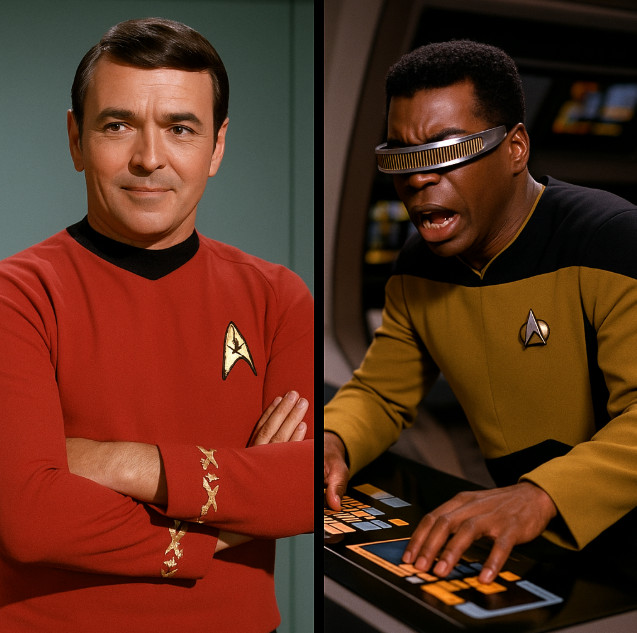
So yes - if it ain't broke, don't fix it. But also don't ignore the chance to make things better before they break. Scotty might argue for leaving the warp core alone, but Geordi would be running constant efficiency tests. I think the truth lies somewhere between them.
If you are a Visitor, go ahead and post your reply as a
new comment, and we'll move it here for you
once it's approved. Be sure to use the same name and email address.
This thread is now CLOSED. If you wish to comment, start a NEW discussion in
Captain's Log.