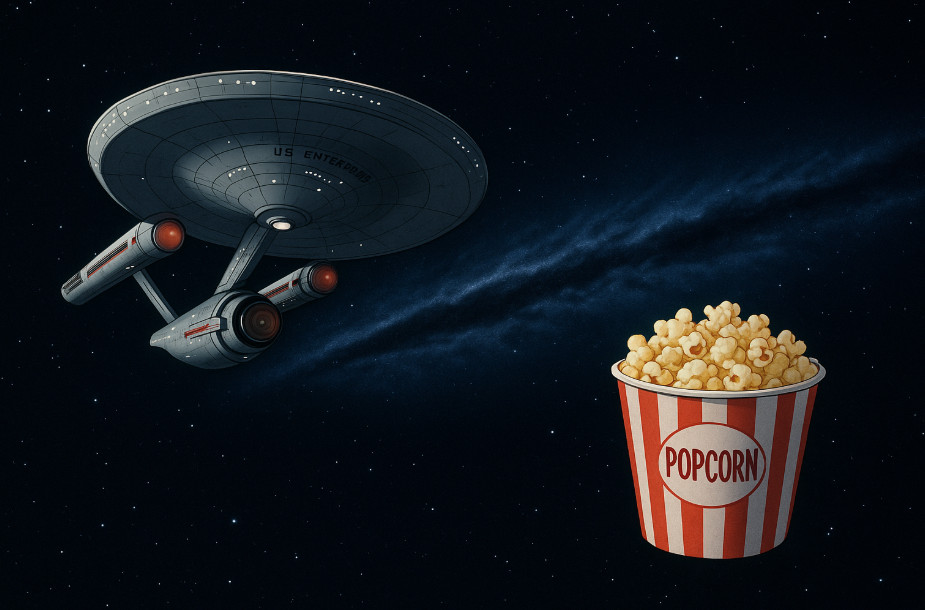
When my kids were little, I learned one of the toughest parenting lessons at the movie theater. My son, kindergarten age at the time, was misbehaving in the concession line. I warned him - behave, or no popcorn. He didn't listen. So I followed through. I bought myself a snack, I bought his sister some popcorn, but when we sat down in the theater, he got nothing. The look on his face was enough to break my heart, but I held firm. I reminded him of the deal, and told him he could ask his sister to share. At first she didn't, then eventually she did. It wasn't fun for anyone, but from that day forward, when I gave him a warning, he knew I meant it. Painful for me, but powerful for him. In fact that sad look on his face with his eyes tearing up and his bottom lip curling still bothers me to this day. But I know deep down it was the right thing to do.
That whole experience reminds me of the idea of consequences in other parts of life. In Access development, it's easy to put things off thinking you'll get to them later. I do it myself. You build your tables, everything seems to work fine, and you tell yourself you'll circle back and clean things up someday. Indexing is the perfect example. I just went through all the tables on my SQL Server that runs my website and found some that weren't indexed properly. Sure enough, that explained why certain queries were much slower than they should have been. Indexing isn't exciting, but skipping it has consequences.
The same goes for commenting your code. It feels like busywork when you're in the zone writing it. You think, "I'll remember what this does." Fast forward ten years and you're staring at a chunk of spaghetti code asking who the idiot was that wrote it. Then you realize it was you. The stuff that feels optional in the moment is exactly what makes life harder down the road.
And in tech in general, the same principle applies. Skip security updates, leave default passwords in place, or tell yourself you'll set up a proper backup tomorrow, and you're setting yourself up for pain. I always say backups are like flossing: everybody knows they should do it, everybody puts it off, and then they're surprised when things get ugly. If you don't have automated backups, it's not a question of "if" you'll regret it, it's "when." When the data center is on fire, you'll be the one staring at the ashes asking yourself when your last off-site backup was. Consequences.
It also maps onto fitness. Skip your workouts long enough, or ignore your nutrition, and the bill comes due. You can't negotiate with physics or biology. That extra 10 pounds doesn't vanish because you tell yourself you'll start dieting "next Monday." The scale enforces the rules whether you like it or not. And sometimes the consequences are more severe. My Italian grandfather lived the classic pasta-heavy lifestyle, carried too much weight, and never exercised. He was gone at 54 from a heart attack. That was a wake-up call for me. It showed me that you can only outrun bad habits for so long before biology collects the debt.
Politics works the same way. You keep collecting tax money from the public and telling yourself you'll get around to fixing the roads, bridges, and water systems someday. Kick the can down the road long enough, and sooner or later you end up with a bridge collapsing or a water main bursting. The people in charge act surprised, but the truth is the consequence was built in from the very first delay. Ignore maintenance, and the bill eventually comes due - with interest.
You know how in Star Trek they sometimes warn the crew that pushing warp speeds is damaging subspace, but the captains or engineers shrug it off and keep pushing anyway? In TNG episode "Force of Nature" the Enterprise crew discovers that sustained warp travel is harming the very fabric of space. The scientific case is solid - but many ships continue operating at full warp because it's faster, more efficient. Eventually the Federation is forced to issue a directive limiting warp speeds to reduce further damage. That's a classic case of ignoring consequences in hopes you'll fix it later - until the universe forces you to. (1)
I'm sure that episode was an analogy for climate science. For decades, scientists have been warning us that Earth is heating up and that human activity is the primary driver. The consensus is overwhelming - NASA still cites about 97% of actively publishing climate scientists in agreement, and more recent reviews of tens of thousands of peer-reviewed studies put the number at over 99.9%. The data isn't fuzzy, it's not even a debate anymore. And yet here we are, with parts of the world investing heavily in solar, wind, and renewables, while others double down on coal and oil. You can't put your head in the sand and pretend the physics doesn't apply to you. Whether you like it or not, the consequences are already in motion, and ignoring them won't make them disappear.
I've had clients who ignored my advice about data backups or website security. They didn't want to spend the money, and then a year later they lost their data or got hacked. They looked at me the way my son looked at me that day - as if I had personally taken away their popcorn. But the truth is, the consequence was baked into the decision the whole time.
Discipline, whether in parenting, coding, fitness, or politics, is about doing the right thing and following through on what you say. It means listening to the warnings, whether it's a dad in a movie theater telling his kid no popcorn, an IT consultant reminding you that you really need a proper backup system, or thousands of scientists showing us the evidence on climate change. The lesson is the same: ignore the consequences at your own peril. It may hurt in the moment, but it is always better than pretending the rules don't apply to you. And unlike my son, the cosmos isn't going to let you borrow a handful of popcorn from your sister.
(1) In-universe, the show never actually states that Voyager's variable-geometry nacelles were designed to reduce subspace damage. On screen they simply tilt up when going to warp without explanation. However, the Star Trek: Voyager Technical Manual (and various production notes) make it clear that the intent was to address the warp-drive damage problem first introduced in TNG. It's a perfect example of how better technology and better science can correct the problems older technology created - if you put your mind to it. Just like today, with advances in solar, wind, and other renewables, we can move away from fossil fuels. The solutions are there. It's just a matter of committing to them. It won't happen overnight, but it can happen.
If you are a Visitor, go ahead and post your reply as a
new comment, and we'll move it here for you
once it's approved. Be sure to use the same name and email address.
This thread is now CLOSED. If you wish to comment, start a NEW discussion in
Captain's Log.