There is a special kind of comedy that happens when someone says they want a problem solved, but the second you hand them an actual solution, they look at you like you just asked them to smell the breakroom milk to see if it's bad. Everyone loves the slogan. Nobody loves the instructions. Suddenly it's too long, too complicated, too much reading, too much thinking. It's not that they want the problem fixed. They want the universe to wave a magic wand and spare them from participating in the process.
Back in my consulting days, I saw this play out constantly. XYZ Company would call me in because their Access database was "broken." They already had a guy (we'll call him Mike) on staff building and maintaining it, but they wanted me to fix it. Fine. I would spend a day or two taking it apart, mapping the tables, digging through forms, and checking the queries that had been duct-taped together over the years. Someone clearly thought Ctrl-C and Ctrl-V were design principles.
Then I would hand them a list of what needed to be done. Proper normalization. Relational structure. Get off that ancient Access backend with 30 users hanging off it like ornaments on a Christmas tree. Move the data to SQL Server. Add indexes. Remove the six nested IIF monsters that should have been queries in the first place. And then their eyes would glaze over. They just wanted me to push a button that says Fix Database.
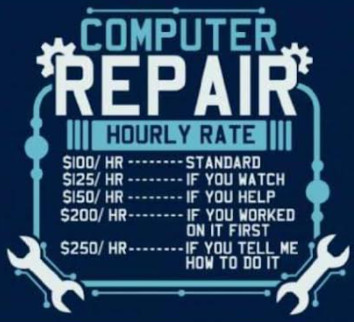
If I told them it would take me two weeks and cost around $10,000, they would panic. And the best was when they asked if I could just teach Mike to do it. Sure, I can teach Mike. It will take four weeks and cost around $20,000. I used to joke with clients that if I fix it for you, it's $50 an hour, if you stand over my shoulder, it's $70, and if I have to explain it all to you, it's $100. That usually got a laugh. I was serious. Oh, and these are 1990s prices, by the way.
This is very much the software world in a nutshell. Everyone wants faster performance and fewer bugs, but when the solution involves rewriting legacy code or replacing the six VBA modules that have been rotting in the corner since 2004, suddenly it is "not that simple." People want a magic index that solves everything. They want to keep their spaghetti joins, their lookup fields, and their tables named Stuff1 and Stuff2, but they also want speed and stability. They want the slogan without the steps.
It happens everywhere in tech. Users want their computers to run faster, but nobody wants to uninstall their 57 Chrome extensions or stop downloading mystery ZIP files. They want the shortcut that does everything except require them to change a habit. If I had a dollar for every time someone asked why their PC is slow, and the answer was "because you installed everything except a kitchen sink," I could have retired years ago. Tell them how to fix it and watch the enthusiasm die on the spot.
Business and management follow the same script. I worked with plenty of managers who demanded productivity and efficiency, but did not want to hear about documentation, workflow changes, or actual process improvements. They wanted posters on the wall about teamwork. Managers love posters because they are the cheapest form of leadership. They wanted slogans from a TED Talk. The moment you hand them a real plan that involves people doing things differently, spending money, or tracking metrics, suddenly it's too complicated. The slogan was fun. The solution is not.
Relationships are not immune either. People say they want communication, but what they really want is for the other person to magically understand their needs without having to say them out loud. They want harmony without honesty. The moment you bring up something like active listening or setting boundaries, the response is often a blank stare and a quick pivot back to complaining. Much like software, relationships break when you skip the documentation.
In fitness, this mindset pops up everywhere. People want to lose weight or gain muscle, but recoil when you hand them a plan involving counting calories, sets, reps, and consistency. Everyone wants the six-pack, as long as it does not require tracking protein or keeping a logbook. The fitness industry thrives on slogans because the real solution looks too much like work. It's much easier just to take a daily shot than to track what you eat and how many steps you take.
Society and politics follow the same pattern. Everybody wants to end crime or end corruption or fix healthcare, but the instant a policymaker presents a detailed plan, half the country refuses to read it and the other half complains it is too long. Bumper stickers beat nuance every time. We say we want better roads, stronger bridges, cleaner water, and a power grid that doesn't fold in half every time a squirrel sneezes, but mention the words taxes, construction delays, or lane closures and suddenly everyone remembers they have somewhere else to be. Everyone wants affordable healthcare, but not the regulations, tradeoffs, or cost controls that make it possible. We want clean energy and less pollution as long as the wind turbine or nuclear plant is in someone else's backyard. We want safer neighborhoods without paying for training, officers, equipment, or mental health resources. We want better schools, smaller class sizes, and modern materials, but the moment budgets come up, the room gets quiet. And of course everyone wants to reduce the national debt, as long as we don't cut anything we like or raise a single dollar of revenue.
The Religious Right loves this game too. Oversimplified moral slogans that avoid any messy details or evidence. And if the evidence contradicts the slogan, well, just ignore the evidence. It's much easier that way. I try to keep my site a safe space for all beliefs, but I also insist on actual science, and science rarely fits on a bumper sticker. What makes it tricky is that these slogans are comforting. They offer quick certainty in a world that is anything but simple. But real questions about biology, medicine, climate, or human behavior are almost never solved with a catchy phrase. That is where the hard work comes in. It means looking at data, testing assumptions, and sometimes admitting that an old idea needs updating. That part is uncomfortable, which is why so many people would rather cling to the slogan than deal with the substance. It feels safer to defend a simple answer than to wrestle with a complex truth, even if the truth is the thing that actually helps people.
People love big, sweeping, comforting answers, but not the introspection that goes with them. "End the problem" sounds heroic. "Here is how to end the problem" sounds like reading, thinking, and maybe a little discomfort. Simple feels good. Complex feels like homework. That might be why people cling to slogans instead of nuance. Slogans are easy. Solutions are not.
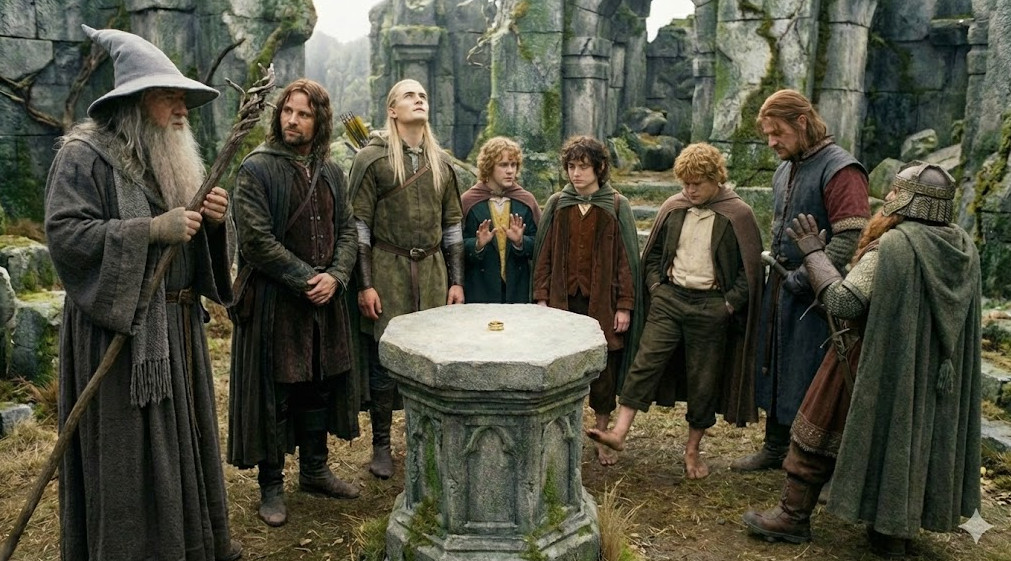
It is the same pattern you see in fantasy stories too. In Lord of the Rings, everyone agrees the Ring has to be destroyed. Every council, every kingdom, every wise old wizard nods along. Of course the problem must be solved. But the moment the actual plan is laid out, and the steps involve sneaking into Mordor, crossing hostile territory, dealing with orcs, hunger, despair, and a volcanic mountain that wants to kill you, suddenly there is a whole lot of shuffling and looking at the floor. Everyone wants the problem ended. Nobody wants to be the one carrying it up a volcano.
We love the idea of improvement right up until the moment improvement requires us to actually do something. It's not that people don't want things fixed. They just want someone else to fix them while they applaud from a safe distance.
Richard 100% agree, Richard! People want simple, free, and "now" solutions to problems that have developed over years. Unfortunately, solutions to real-world problems are rarely simple, free, or quick. Even in the 24th century, Capt Janeway had to limit her morning coffee because USS Voyager didn't have enough energy for the replicators. LLAP!
Sam instant gratification is why so many people would rather doom scroll thru a billion 30-second videos of people doing dumb stuff instead of watching one quality 10-minute tutorial to learn something. Need that dopamine quick fix.
James Chessher
@Reply 9 months ago
One of my favorite irritants is a Budget mandate to cut costs and for ease of numbers say $100K. So management easily squeezes out $15K (often by cutting future desperately needed upgrades). But once the rest of the $85K is looked for, no one wants to cut anything from their slice of the pie. Result: The future is sacrificed for the present, the big goal is never achieved. And the entire mess is put on the back burner for someone else to deal with. Now just multiply that by 1 Billion and you get Congress!
One of the problems with having politicians that are elected for very short cycles is that when you've got a president who's only in for four years and representatives who are only in for two years, they care much more about getting re-elected than they do about long-term progress.
Matt Hall
@Reply 9 months ago
This seems to be a common problem in our culture today.
I am reminded of the Dave Ramsey quote: "We live in a culture full of hares; but the tortoise always wins."
Matt Hall
@Reply 9 months ago
Richard The benefit of term limits is the politician only has their legacy to worry about in their last term. This would allow the voter to leverage the politicians' hubris for public benefit. With a two-term limit in the house, 1/2 of the representatives are focused on their legacy. With a one term limit in the senate, we get 100%. (-random thought...)
Michael Olgren
@Reply 9 months ago
"One does not simply walk into Mordor..."
I am so guilty of this and it seems to get worse as I get older. Intellectually I know what I need to do to improve myself and my environment, but the elephant (emotion) is often so much stronger than the rider (intellect) [this is why I have the elephant tattoo]. It boils down to discipline, that ability/skill that no one has ever figured out beyond "just do it." Yes, I know about chunking, etc. None of that works if you cannot even take that first tiny step. I need a magic wand to give me the discipline to do the work!
Once again, attitude is more important than fact in this specific instance.
Michael Olgren
@Reply 9 months ago
Michael Olgren
@Reply 9 months ago
After my post I got motivated and raked the leaves pictured above. They exemplify the one tool I've found that reliably helps-- procrastination. Tomorrow it's supposed to snow here, so the leaves really have to be done.
And to show how people can take advantage of others' lack of discipline (or plain laziness), these bags took me 90 minutes and I'm about 70% done (ran out of bags). I have previously paid a landscaping company $3000 to do this (I am on Cape Cod), taking them 3 people over 6 hours. [Apparently my Boomer work pace is a bit faster...] Thus, frugality is also motivating... 😂
Which also begs the question: where are the kids who would do this for $500?
I actually have a whole Captain's Log coming out about procrastination. I've been taking notes on it for a while. For me personally, I have been saved by procrastination a few times in my life where not taking action and just letting something run its course ended up being the best option. But more on that later.
When I used to live in Buffalo, I used a mulching mower so that instead of having to rake leaves, those nutrients just went back into the lawn. I always thought that was the best thing to do - just grind them up and let nature do its work. Yeah, raking leaves is a pain in the behind.
Of course, here in Florida, the worst I have to do is pick up the occasional fallen palm frond. :)
Sorry, only students may add comments.
Click here for more
information on how you can set up an account.
If you are a Visitor, go ahead and post your reply as a
new comment, and we'll move it here for you
once it's approved. Be sure to use the same name and email address.
This thread is now CLOSED. If you wish to comment, start a NEW discussion in
Captain's Log.