I talked about this in Quick Queries 95, but I feel strongly about this issue, so I wanted to post it here as well, and open it up for discussion in the Captain's Log.
I recently received an email from John up in Windsor, Ontario, expressing concerns about artificial intelligence, data centers, electricity consumption, water usage, and the environmental impact of all this new technology. I'll put John's email in the footnotes below.
John and I actually agree on a lot of this, but we come to very different conclusions.
His concern is that AI uses a tremendous amount of electricity. Data centers consume huge amounts of power and water, and all of that has environmental consequences. On that point, I completely agree. Those are legitimate concerns, and they're concerns that governments, regulators, and the companies building these systems need to take very seriously.
Where I disagree is when people say the answer is to simply stop using the technology.
To me, that's like saying, "It's 1995. The internet uses too much electricity. Stop using email and go back to fax machines." Or saying, "Cars consume fuel and create pollution, so let's stick with horses."
History has shown us over and over again that once a useful technology arrives, it doesn't go away. The printing press didn't go away. The steam engine didn't go away. Computers didn't go away. The internet didn't go away. AI is now part of that list.
The question isn't whether we're going to use it. The question is how we use it responsibly.
I absolutely believe there should be environmental standards. I think data centers should be efficient. I think companies should be held accountable for their environmental impact. I think governments should be investing in cleaner energy and protecting the environment. On that, we agree 100 percent.
I don't think the climate problem is going to be solved because Richard Rost turns off his laptop at bedtime. Yes, my computer uses electricity. Yes, your computer uses electricity. But the solutions to climate change are much larger than individual people unplugging their devices at night.
This is a societal challenge that requires better infrastructure, cleaner energy production, smarter regulation, and long-term planning.
As a solo entrepreneur, I'm a one-man band. I use AI to help me research topics, organize ideas, check my work, and create a better product for my students and viewers. It doesn't replace me. It doesn't make my videos for me, and it never will. It simply helps me do my job better.
In the same way that accountants adopted calculators, engineers adopted computers, and businesses adopted spreadsheets, this is another tool that people are going to have to learn how to use.
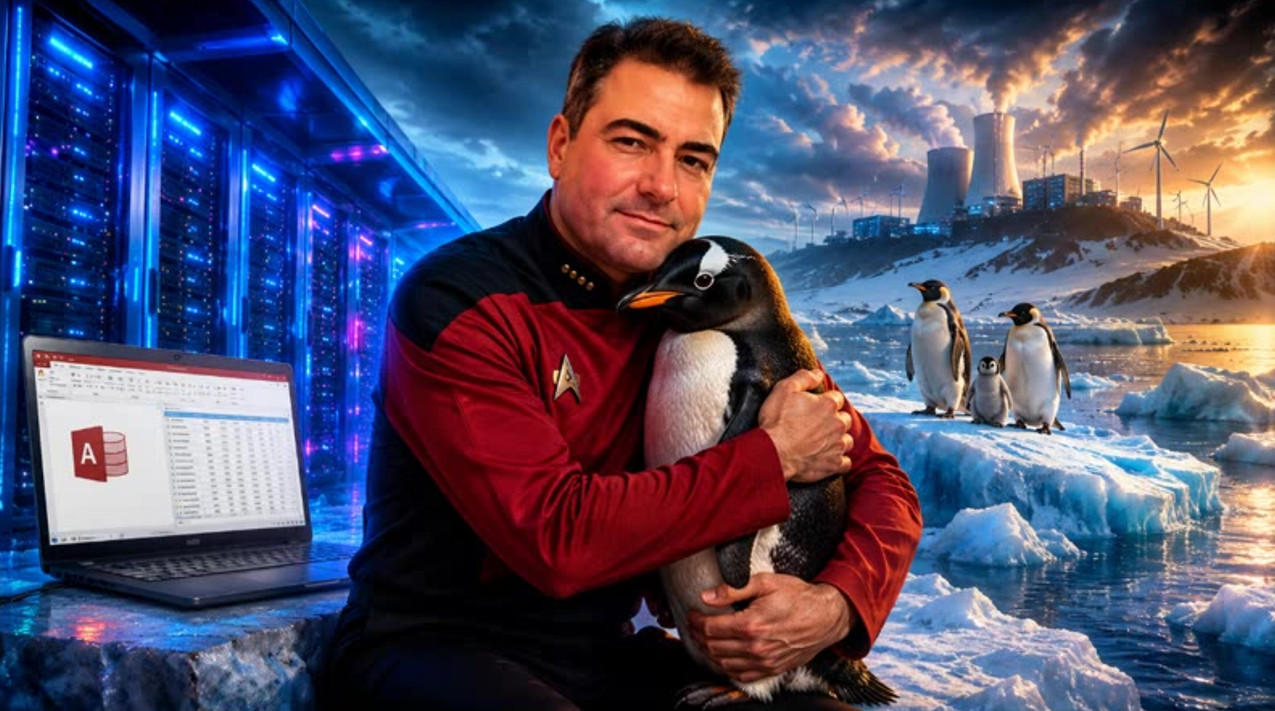
Frankly, what worries me most isn't humanity. It isn't my kids and grandkids. Humans are incredibly adaptable. We've survived ice ages, wars, pandemics, and all kinds of environmental changes. What worries me most are the species that can't adapt as quickly. The wildlife. The shrinking habitats. The ecosystems that disappear. And yes, the penguins losing the ice they depend on.
That's the stuff that keeps me up at night. Once a species is gone, it's gone. That's why I think environmental protection matters so much. Not just for humans, but for the rest of the planet.
To be a little political for a moment, I'm very pro-science, and one of the things that concerns me right now is seeing environmental protections that took decades to put in place being weakened or dismantled. I don't care whether it's a Democrat or a Republican doing it. If the science says a regulation is protecting the environment, then I'll generally support it.
I understand that regulations cost money. Businesses don't like regulations because compliance costs money. But sometimes that's the price of living in a civilized society. If a company has to spend more to reduce pollution, protect water resources, or lower its environmental impact, then that's money well spent. Yes, some of those costs eventually get passed on to consumers. That's reality.
If ChatGPT cost me $50 a month instead of $20 a month because OpenAI had to meet stricter environmental standards, use cleaner energy, or offset more of its carbon footprint, I'd pay it. I'd rather spend a little more and know we're being responsible than save a few bucks and pretend the problem doesn't exist.
To me, that's the real conversation we should be having. Not whether we should abandon technology, but how we make sure technology is developed and used responsibly. Let's have serious conversations about the cost of AI. Let's make sure we're building these systems properly. Let's push for cleaner energy and better environmental stewardship.
I don't think the answer is to pretend that technology doesn't exist or to refuse to use it. The genie is already out of the bottle. The better approach is to learn how to use it wisely and make sure it's developed responsibly.
Before someone asks what any of this has to do with Microsoft Access, quite a bit actually.
I've already done several TechHelp videos showing how to integrate AI into Access applications. We've looked at connecting to AI services, generating content, analyzing data, and automating different kinds of tasks. Honestly, what I've shown so far is just scratching the surface.
One of the future courses on my roadmap is a full Microsoft Access and AI course. My SQL Server series is still my top priority at the moment, but AI is definitely something I want to spend more time teaching.
Whether we like it or not, AI is becoming another tool available to developers. Just like we learned VBA, SQL, ODBC, web services, and all the other technologies that came along over the years, Access developers are going to have opportunities to use AI in their applications too.
While I respect the concerns about environmental responsibility, regulation, and sustainability, I don't think the answer is to ignore technology. My approach is to learn it, understand it, teach it, and help people use it responsibly. Whether we're talking about AI, the internet, computers, databases, airplanes, or whatever comes next, the people who learn how to use new tools effectively will generally do a lot better than the people who pretend those tools don't exist.
As for me using AI to generate images, I'm sorry, but that genie is out of the bottle too. I love this technology. Being able to create custom illustrations, funny scenes, and visual examples for my videos and title slides in just a few minutes is amazing. I can't wait to see where it goes next.
I will never use AI to completely replace my videos. I still like making my own content. I like teaching. I love recording these videos. I like the way I produce them. AI images are just another tool in my toolbox, like a camera, a microphone, or a video editing application.
If this technology has environmental costs that need to be addressed, then that's something society and our governments are going to need to work on. I'll continue supporting leaders who take environmental issues seriously.
But asking individual people to stop using useful technology isn't the solution. History shows that once a tool becomes genuinely useful, people are going to use it. The better approach is to figure out how to make it cleaner, more efficient, and more sustainable.
As an old school geek like myself you remember the days of actually turning off device at end-of-day. Dumb terminal, PC, monitor, whatever...
We've already gone too far away from that... Servers and communications equipment consuming electricity and generating heat 24x7... and too many of us leaving our PC's and monitors on overnight. That in itself has to stop.
But now AI has come along and is amplifying the problem exponentially, plus, adding horrid levels of water use to the problem.
Please stop using it. I know it's awfully easy to see AI as the next step forward in tech, but it's going to make our planet uninhabitable for humans way too soon. I need to live here for a while more, and so do my kids, and so do you.
We can already do a week's work of the labor our grandparents did in just an hour or so. Do we need to be *more* 'productive'? How fast is fast enough?
I prefer trees, walking or biking to work and knowing I did what I could to give my kids a chance. Turn off the tech at end-of-day and go actually experience face-to-face human contact.
Plus I prefer the real images of you, not the trekkie redo's.
I agree with your discussion about technology. Should We Stop Using AI? In one of your other videos you remarked about how AI needs databases to get it's reply from - so if all the world were to stop using databases, where would AI get it's data from?
AI uses a tremendous amount of electricity - if all the wolrd were use solar, wind, hydro or some other renewable energy that hasn't been thought of yet, the amount of electricity would not matter.
And do you know there are penguins at the Galápagos Islands, perhaps the penguins down south can migrate north...
I'm 100% on board with renewable energy. Solar, wind, hydroelectric, geothermal, and even nuclear power are all preferable to burning fossil fuels if we can make them work safely and economically. If we can generate the electricity AI needs with cleaner energy sources, then the environmental impact becomes much easier to manage. They should make it that every new data center has to provide its own renewable power. Buy up land around it and build a bunch of solar panels and windmills.
I'd actually love to put solar panels on my house, but living here in Southwest Florida, hurricanes make me nervous. Plenty of people do it, but once you're mounting equipment to the roof and dealing with insurance considerations, it becomes a tougher decision for me personally.
As for the Galapagos penguins, I'd love to go see them someday. From what I understand, however, most Antarctic penguin species can't simply migrate north and solve the problem. They're adapted to very specific ocean conditions and food sources. The bigger issue isn't just where they stand. It's that the entire ecosystem, including the krill and other food they depend on, is closely tied to sea ice and cold-water environments.
Ultimately, I think we're in agreement. The answer isn't to abandon useful technology. The answer is to produce the energy we need in cleaner ways while protecting the ecosystems and wildlife that can't adapt as quickly as we can.
Good morning guys, thought I would chime in here simply because it is 'close to home' for me....literally. My back yard is a solar field built by Google to power their new whatever it is a mile down the road. I agree the energy needs to be coming from the right source and makes things more manageable.
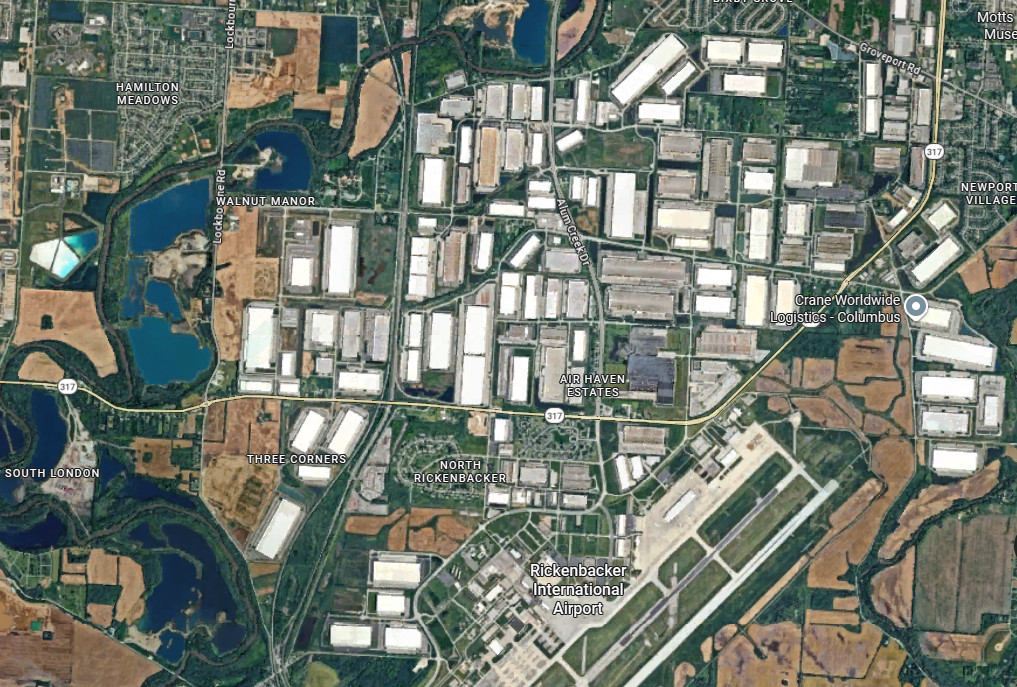
I still use tech and AI a bit but I still have a huge problem with overall how things are being implemented. As great as the solar farm is for the electricity it isn't enough. There is a much longer story behind all of it but the short of it is they built this solar farm to power their new facility but they still have dozens and dozens of semi truck trailers full of diesel generators running frequent enough to make me question how much the solar panels are actually doing. Additionally, and more importantly, they are ruining the water in the surrounding areas. It has run several wells dry to surrounding houses and there are reports that it is beginning to contaminate the local city water plant as well (which happens to be on the same road as the houses with dry wells). On top of everything, this particular deal which I am told is pretty typical for local governments to grant to businesses provides them with massive incentives like free water which the community ends up paying for. Here is a link to the area zoomed in primarily on the solar field: link.
It looks a lot smaller than it does when you are driving it or staring at it from your back porch lol.
Yeah, that's a huge solar farm, but what's even worse is they're wasting good land for that. If you zoom out and look further to the east by that airport, there is twenty times the square footage of warehouse rooftops that could have easily been made into solar panels. See, that's a big waste. I don't like the idea of taking open land that could be used for better purposes and just slapping up solar panels. They should be over houses, parking lots, driveways. It's like here in Southwest Florida. The insurance companies don't want us putting solar panels on our roofs because it could damage the roof and it's a hurricane risk. Okay, that's fine. Why not let us put solar pergolas over our driveways? Nope, can't do that. It's against the city code. Government is stupid.
Richard You sir are NOT wrong lol. Proceed with caution lol but street view has always shown me more the scale of things. The warehousing area all private businesses so it wouldn't surprise me if they don't want to want to take on that project and potentially help out the entire community but that airport is primarily military use. I'm sure there is a ton of space they could have contributed without significant impact to themselves. I used to live in Sarasota when I was a kid, I don't remember seeing the wasted space the way I do here but then again, solar wasn't a big option 25+ years ago like it is today and I had the blinders of a kid on. Maybe we take a break from databasing to teach whoever is in charge how to make things efficient. Optimizing things is a requirement in our line of work right?
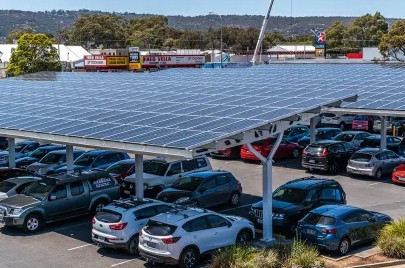
This should be every parking lot in the state of Florida. Not only would it keep you dry when you're getting in and out of your car, but look at that solar potential.
Sam Domino
@Reply 3 months ago
Its not only politicians, insurance companies, etc. that are "solar resistant". My HOA refuses to consider allowing home owners to put in solar panels, solar shingles, or solar anything. They say it hurts the "aesthetic" and resell values. But they have no problem with allowing folks to put in home generators that put exhaust gases into the atmosphere and put out 75db sound once a week/month when they run a test cycle. I hope someone/somewhere is working on a ZPM (see Stargate TV series). :-)
Yeah, I will say I have a standby home generator, and it runs a weekly test every Wednesday at 2 p.m., and that sucker is loud. I feel bad for my neighbors on that side of the house, but what are you gonna do? After Hurricane Ian, we had no power for ten days, and I am not going through that again. LOL.
Michael Olgren
@Reply 3 months ago
I have to point out a caveat: new technology does not go away... until it gets replaced. The cassette > 8-track > CD > iPod > phone progression has occurred in just my lifetime. I point this out to show that no technology is existentially essential-- we won't die without it. Ai is in a unique spot. There are scientists out there already saying that our current methods of power generation will be outstripped by AI's power demands. Yes, that will throttle AI, but the problem is it throttles US first. John Q Public will get his power AFTER Joe Billionaire gets his AI power. That's the problem.
The climate thing is more than climate. It's water. AI datacenters are sucking up the water. Full disclosure: I own stock in a company that manages/sells the water access to these AI datacenters. Yep, it's booming.
AI as a tool is fine. I'm not saying get rid of it. I'm saying throttle it way down. John Q Public does not need AI in every computer; or, at a minimum, he can WAIT until we sort out the power, water, and climate issues.
Michael Olgren
@Reply 3 months ago
It was easy to find multiple scientific articles to support my concerns over AI's power consumption. Here's one that's interesting from Scientific American: https://www.scientificamerican.com/article/ais-power-needs-will-destroy-the-renewable-energy-revolution/
It shows that AI power consumption is eating away at the gains from solar power and will actually force us to burn more fossil fuels. Rick, you may want to put some penguin DNA into cryo so you can bring them back when/if the human race regains its "common sense!"
One of the biggest issues with AI right now isn't necessarily AI itself, it's that companies are stuffing it into every nook and cranny of their products because compute is relatively cheap compared to the value they think they're getting from it. Open a Gmail thread and it immediately generates an AI summary I didn't ask for and usually don't need. Amazon throws AI summaries on product reviews. Every app seems determined to insert an AI assistant somewhere. Multiply that by hundreds of millions of users and that's a lot of electricity, water, and compute being burned for features that are often marginally useful at best.
Personally, I think part of the solution is proper pricing and regulation. If data centers have to pay the true cost of the electricity they consume and the water they use, then AI services will naturally become more expensive. When that happens, companies will start asking a much tougher question: "Does this feature actually provide enough value to justify the cost?" A lot of the frivolous AI integrations might disappear overnight.
That said, I still use AI every day and happily pay for it because it genuinely saves me time as a solo entrepreneur. I use it for things like proofreading transcripts, generating lesson quizzes, brainstorming ideas, and other tasks that would otherwise eat up hours of my week. The quizzes are a good example. They don't take any extra effort on my part, students seem to enjoy them, and I've received a lot of positive feedback from people who use them as a quick self-check after a lesson. That's a pretty good tradeoff in my book.
As for the penguin DNA, we're already heading down that road. I was just looking at a service that will preserve and clone your dog's DNA. It's not cheap, somewhere around $20,000 from what I saw, but the technology is already here. If we ever get to the point where we can bring back extinct species responsibly, you know I'd be first in line to help save the penguins.
Matt Hall
@Reply 3 months ago
Richard , you hit the nail on the head. Regulated monopolies, such as utilities, should not be allowed to charge one customer more or less per unit of product than any other. Data centers, and all businesses for that matter, should pay the same rate per kilowatt-hour, therm, or gallon as every other user. This improperly shifts the cost burden from the discount rate-payer to the premium rate payer. With equal pricing, business' calculus would then be based on the true cost of the utilities. The additional sale of a large quantity of service would fund its own capacity increase. That would also create the community pressure on the regulators to contain utility costs, in order to attract business.
The water part of the equation seems to be somewhat overblown. In some parts of the country, they could use as much water as they want. In southern Indiana for example, we could put 100 data centers, using 5 million gallons per day, and that would only consume about 3% of the water that is passing by, on its way to dump into the Gulf anyway. Water doesn't get consumed so much as borrowed. "Consumed" water will evaporate into the atmosphere and largely return back into the same river system it was drawn from. Once that short circuit of the water cycle has completed, maybe a couple of weeks, the river would return to normal levels as that 3% falls as additional rain and flows back by those same data centers, in the same river. The further down the Mississippi you get, the less impact it will have.
In arid areas, with expensive water, power plants currently use closed loop cooling, meaning the water carries heat out to the atmosphere but is not evaporated for cooling, like the radiator on your car.. They use very little water by comparison. This same old technology could be applied to data centers.
Anywhere coastal has access to the best heatsink on the planet. They could use open loop cooling with ocean water or use a closed loop into the ocean for cooling. Other areas may be suitable for geothermal cooling.
Considering how fast, cheap, and environmentally friendly fiber is, I don't think the data centers really have to be located in any specific place.
Also, nobody really talks about the constantly improving efficiency of computing equipment. These large data centers will wind up being major drivers in that pursuit. Capitalism will drive that as a simple matter of economics.
People are only freaking out about electricity now because our grid is currently running on the edge of capacity due to years of irresponsibly shutting down production capacity, to "save the environment", without replacing that lost capacity. That is why so many of these data centers are looking at portable generators as a quick, but expensive, fix.
Your other point, about over use, is also accurate. It reminds me of the old days when everyone talked about the "Information Super Highway. Eventually people figured out that having a useless website didn't generate value.
Yes, that's true, but no matter how you look at it, we still have the issue of heat. We keep generating heat and putting it into the atmosphere or the oceans. I just watched a YouTube video this morning about how lots of Caribbean islands, as well as Mexico, are dealing with millions of tons of sargassum - millions more than they're used to - because the water is so warm and the stuff is just multiplying like crazy. Let's just keep heating up the planet, folks.
Sam Domino
@Reply 3 months ago
FYI...I watched a video about using sargassum to make building blocks (mixing it with clay) or using it dried (or its ashes) to make stronger concrete. Also, saw a video about Ocean Thermal Energy Conversion (OTEC). It uses the difference between surface and bottom temperatures to generate electricity. The greater the difference the more electricity produced.
Maybe Elon has the right idea... put data centers (and maybe all mining and manufacturing) in Space. LLAP!
If you are a Visitor, go ahead and post your reply as a
new comment, and we'll move it here for you
once it's approved. Be sure to use the same name and email address.
This thread is now CLOSED. If you wish to comment, start a NEW discussion in
Captain's Log.