The Pottery Class Paradox is a great lesson for anyone trying to master a skill, whether it is art, programming, or even recording video lessons. The story goes like this:
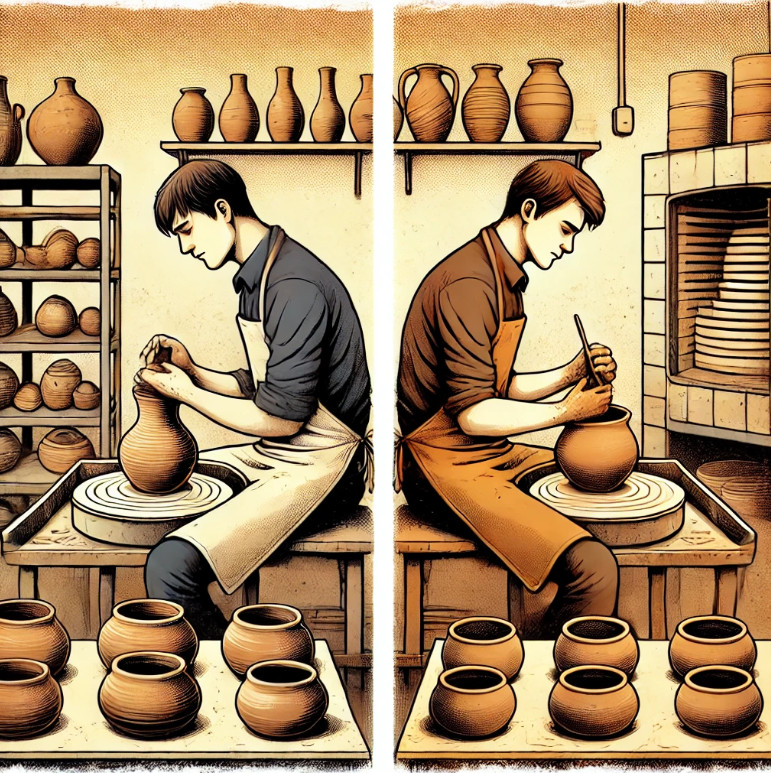
A ceramics teacher divides their students into two groups. One group is told they will be graded on quality. They only need to create one perfect pot. The other group is graded on quantity. Their grade depends on the total number of the pots they produce, no matter how good they are.
By the end of the class, the best pots did not come from the perfectionists. They came from the group that just kept making pot after pot. Why? Because they practiced, learned from their mistakes, and improved naturally over time.
I used to struggle with this myself when building databases for clients. I would spend too much time trying to perfect every little detail instead of just getting a solid, functional system in place and refining it as needed. The client did not need perfection. They needed something that worked well and met their needs.
The same thing happened with my video lessons. Early on, I would spend weeks or even months refining a single class, trying to make everything flawless. But in doing so, I was not producing nearly as much content as I could have. Over time, I realized that just sitting down, hitting record, and getting it done was far more effective. Not only do I get more done, but I also improve naturally as I go.
This is the same lesson the crew of the Enterprise had to learn time and time again. In theory, the perfect plan sounds great, but when you are under fire from a Romulan warbird, you do not have time to weigh every possibility. Sometimes, you just have to act, adjust as needed, and keep moving forward.
So whatever it is you are working on, whether it is coding, teaching, or even just a personal project, do not get stuck trying to make it perfect the first time. Get something done, learn from it, and improve along the way.
Many, many (add a few more dozen manys) moons ago, I heard a talk by Tom Peters where he extolled the advantage of "Ready, fire, aim".
That's one of the reasons I first created my RAD, to be able to prototype quickly, and then refine as the client needed.
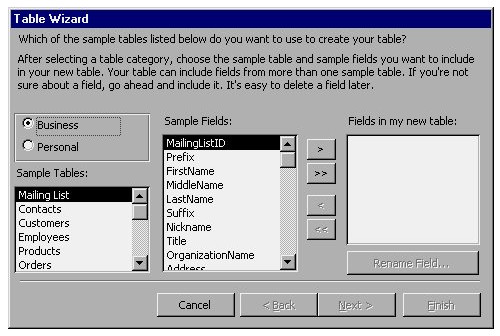
I had a "tool" that would build a "table" and form within minutes. Kind of like the old Access wizard for building tables. The form wizard is still here.
I hope to revive the concept of the table wizard in the ADS.
It's the same concept that I had in my RAD. Forms are so much more complicated now, I'm now sure I can do that in a wizard.
However, I do have a template, that has all the helper code ready.
Sorry, only students may add comments.
Click here for more
information on how you can set up an account.
If you are a Visitor, go ahead and post your reply as a
new comment, and we'll move it here for you
once it's approved. Be sure to use the same name and email address.
This thread is now CLOSED. If you wish to comment, start a NEW discussion in
Captain's Log.