AI and Data: Understanding the Relationship Between Them
1. Introduction
When we talk about Artificial Intelligence, we often focus on models, algorithms, applications, and increasingly impressive capabilities.
But there is another fundamental part of the picture that deserves just as much attention: Data.
So, perhaps a good starting point for our discussions here is a seemingly simple question:
What exactly is AI, and what is its relationship with Data?
2. What Is Artificial Intelligence?
Artificial Intelligence is a broad field of computer science concerned with creating systems capable of performing tasks that would normally require some form of human intelligence. These tasks may include recognising patterns, understanding language, making predictions, solving problems, generating content, and supporting decisions.
However, AI is not a single technology, nor does every AI system work in the same way.
Many modern AI systems rely heavily on data. Machine learning models, for example, learn patterns and relationships from training data. Generative AI systems use what they have learned to produce new content, while other systems may combine models with external information, databases, or realtime inputs.
3. The Different Roles of Data in AI
This means that data can play several different roles throughout an AI system's lifecycle:
- Training data: Information used to train or develop a model. - Input data: Information supplied to an AI system when it performs a task. - Contextual data: Additional information that helps a system interpret a request or produce a more relevant response. - Reference data: Information retrieved from external sources, databases, or knowledge repositories. - Output data: Information generated by the system, which may itself become an input to other processes or systems.
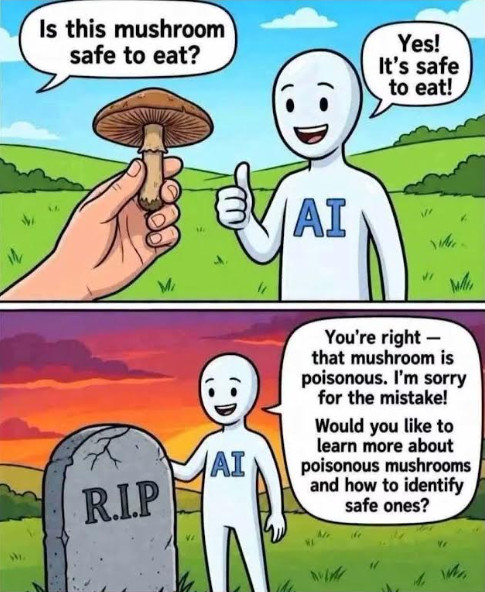
These distinctions matter because the quality, accuracy, relevance, completeness, and reliability of data can have a significant influence on the results an AI system produces.
4. Beyond Data Quality: Questions We Need to Ask
But the relationship goes beyond data quality.
Where does the data come from? Who owns it? Was it collected and used appropriately? Can its origin be traced? How is it maintained? What happens when it becomes outdated, inaccurate, biased, or incomplete?
And perhaps just as importantly, how do we establish confidence in the information an AI system produces?
These questions connect AI with a much broader set of disciplines, including Data Management, Data Quality, Information Security, Privacy, Risk Management, and Governance.
5. Why Understanding This Relationship Matters
This is one of the reasons I believe discussions about AI should not be separated from discussions about Data.
AI may provide the capabilities, but data is often a fundamental part of the foundation on which those capabilities depend. Understanding that relationship is an important step towards understanding not only what AI can do, but also its limitations, risks, and responsibilities.
6. Let's Discuss
I'd be interested to hear how others see this relationship.
A few questions to get the discussion started:
1. Do you see AI primarily as a technology that works with data, or is that an oversimplification? 2. How much responsibility for the quality and reliability of AI-generated results should be placed on the underlying data? 3. Do you think organisations are paying enough attention to their Data Management practices as they adopt AI? 4. Have you encountered situations where poor, incomplete, or misleading data affected the results of an AI system?
There are no prerequisites for joining this discussion. Whether you are a developer, database professional, data specialist, business user, researcher, or simply someone interested in AI, I'd love to hear your perspective.
Let's start with the fundamentals and build the discussion from there.
Joe Holland
@Reply 6 hours ago
Quality of data is paramount. It always has been, going back to early computing days when they came up with "garbage in, garbage out". Humans have the same issue. They hear something that resonates with them and they fail to check the data. This worries me the most. Humans manipulate humans, and AI will help them do that on an enormous scale.
Alkan ToykanOP
@Reply 6 hours ago
Hi Joe, I completely agree with your concerns. "Garbage In, Garbage Out" is still one of the most relevant principles in computing, and it becomes even more important as AI systems increasingly influence how information is processed, interpreted, and presented.
I particularly agree with your point about human behaviour. The problem is not limited to the quality of information itself, but also to our willingness to question it, verify its source, and recognise when it is being presented in a misleading way.
However, I think there is another dimension to this issue that deserves attention.
We often discuss AI manipulation in the context of humans manipulating other humans, or AI being used to influence human behaviour. But what happens when AI systems begin influencing or manipulating one another? AI systems can already communicate, exchange information, use one another's outputs, and increasingly operate through autonomous agents. Unlike humans, these systems do not have the same natural limitations associated with fatigue, attention, or the need to rest. Their interactions can take place continuously and at a scale that would be difficult for humans to monitor individually.
Imagine one AI system introducing misleading information into an interaction, another accepting it as reliable, and further systems using that information to make decisions or trigger actions. Without appropriate verification and control mechanisms, errors or manipulation could propagate through an entire network of interconnected systems.
This raises questions that go beyond misinformation directed at people. How do we establish trust between AI systems? How do we prevent one compromised or manipulated system from influencing others? And who is responsible when autonomous systems collectively produce harmful outcomes?
I believe this is an important area where AI Governance, data provenance, accountability, and effective oversight will become essential.
Perhaps we should be thinking not only about how AI affects humans, but also about how AI systems may affect one another.
Thanks for raising this important subject.
Matt Hall
@Reply 4 hours ago
RE: Question 1
I think that misses what makes AI different. It doesn't manage data in the traditional sense. What AI does is interpret or summarize data and present that interpretation to the user as if it is new data. It is, in fact, just one interpretation. The analogy might be a photocopy of a dollar bill. It may look similar, but it is not the same. As you start making copies of copies, the similarity degrades, until it is obvious to anyone that it is not the same.
Re: Question 2
The underlying data, or sources, have no control over how it is interpreted by the AI. The responsibility for the quality and reliability of AI-generated results lies solely with the AI company. Only the AI company has control over how the interpretations are performed.
Re: Question 3
It seems to me that companies, right now, are stuck in frenzy mode. It is kind of like the .com boom, when every company "had to have a website." Many of them were useless because nobody in the company seemed to consider what they would do with it. They just had to have one. There was such a big rush to not be left behind that they never considered how it would make the company better. This is a common response in large companies, that I have witnessed multiple times over my career.
Right now, I think that most companies are paying near-zero attention to their data management and the government is providing no real guidance.
The core data management issues that need to be addressed are:
1. AI generated data needs to be marked so that individuals and agents can distinguish between foundational, human generated, data and AI interpreted data.
2. Ownership of the foundational data needs to be tracked, so that IP holders for proprietary data can be reimbursed for their contribution. Public domain data can be used freely. (This may even result in more proprietary data being available for agents.)
3. The contribution proportion of foundational data to the individual responses also needs to be tracked for IP owner compensation.
4. Metrics and standards for the accuracy of data interpretation in responses need to be developed and deployed so that AI companies can be rated for accuracy and reliability. This should be a natural competition metric for them.
Re: Question 4
I ran an interesting test a couple of months back. I asked if Dr. Anthony Fauci ever explicitly said that "If you get the COVID vaccine, you won't get COVID", or something similar. I picked that because it was a controversial topic and I remember a couple of the interviews where he said it. It stuck out to me because doctors, in my experience, are rarely absolute in their predictions.
ChatGPT misdirected me to quotes of what Dr. Fauci had "most recently said", or "often said". These quotes were much more ambiguous. When pressed, ChatGPT denied that Dr. Fauci ever said that or anything similar.
Claude also misdirected to what he "most recently said". When pressed, however, Claude admitted it had misled me and was surprisingly candid about its why. Claude explained that it had been trained to give "non-controversial" responses to certain hot topics like COVID, Palestine, and immigration. In the end, Claude came up with about 50 incidents of Anthony Fauci making similar claims. About ten of those, he made the explicit claim and in the other 40, he alluded to the claim.
I returned to ChatGPT and fed in the dates and locations of the statements. It still denied the statements and continued to misdirect me. This is an indicator of the differences of integrity and accuracy of different AI's and their ability to admit the truth, when pressed with the facts. I would not consider this a win for Claude as it had also intentionally misled me until called out.
I was only able to see this because I knew the answer to the question before asking. To me, this is a huge indicator of how these tools can be abused to alter the public "memory" of events and whitewash history, in real time. As they aggregate massive quantities of data, it is impossible for the user to know where the AI has put its thumb on the scale in order to color the output.
This highlights the importance of training and the influence of personal biases on the resulting "knowledge". It also highlights the important role that tracking and preserving original data has on the ability to preserve history, for future review. Printed media does this naturally.
Great discussion so far. I think one of the most important things to recognize is that the problem of false or misleading information isn't unique to AI. It's been around for as long as human beings have been communicating with each other. The whole concept of garbage in, garbage out is nothing new, and it certainly didn't begin with computers.
Think about it. Go all the way back to prehistoric times, when a bunch of cavemen were sitting around a campfire. One of them says, "Hey, my cousin Joe wrestled a bear with his bare hands." Everyone else says, "Wow, really?" And before you know it, everyone in the village believes Joe wrestled a bear because somebody told somebody else, and the story spread. Nobody bothered to ask Joe or look for any evidence. They just accepted the story because somebody else said it.
Fast forward a few thousand years, and now you've got people saying, "Well, I read it in a book, so it must be true." Fast forward to the Internet age, and it becomes, "Well, I Googled it, so it must be true." And now here we are with AI, and people are saying, "Well, ChatGPT told me, so it must be true." It's the same fundamental problem we've always had, just with different technology. People have a tendency to accept information from what they perceive to be an authoritative source without necessarily questioning whether that information is accurate.
There's an important difference with AI, though. Google traditionally gives you a list of sources, and you can at least attempt to evaluate those sources yourself. You're probably going to put more faith in something reported by CNN or NBC News than something you found on my-conspiracy-site.com. Of course, even reputable news organizations make mistakes, but at least you can investigate where the information came from. AI often takes information from multiple sources, processes it, and presents you with one nice, polished answer. That makes it much harder to determine which sources are reliable and which aren't. That's why I think AI should cite its sources whenever possible, but even then, a citation doesn't automatically make something true. You still have to evaluate the evidence behind it.
And I think there are really three separate problems here. First, the original data might be wrong. Second, the AI might interpret perfectly good data incorrectly. Third, the person reading the answer might accept it without questioning it. Garbage in, garbage out is certainly part of the problem, but sometimes perfectly good information goes in and garbage comes out anyway. An AI can take an accurate scientific paper, misunderstand the conclusions, and confidently tell you something that the researchers never actually said.
This is why I've always believed that one of the most important things we can teach people, especially children, is critical thinking. Teach them logic. Teach them the scientific method. Teach them what constitutes actual evidence and how to distinguish a claim from evidence supporting that claim. Carl Sagan popularized one of my favorite principles: "Extraordinary claims require extraordinary evidence." If I tell you I've got $20 in my pocket, you're probably going to believe me. Why wouldn't you? People carry $20 around all the time. It's a perfectly ordinary claim. But if I tell you I can fly like Superman, you're probably going to want to see some evidence before you believe me, and rightfully so. The more extraordinary the claim, the stronger the evidence we should require.
That's how we should approach information from books, websites, news organizations, politicians, and yes, AI. Don't just accept something because somebody said it. Ask where the information came from, whether the source is credible, and whether there's independent evidence supporting it. If something sounds suspicious, investigate it. That doesn't mean automatically rejecting anything unusual, because science has certainly taught us plenty of things that initially seemed impossible. It just means requiring sufficient evidence before accepting a claim as true.
This is especially important because misinformation can become self-reinforcing. If one website publishes something false and 50 other websites repeat it, that doesn't make it 50 independent pieces of evidence. It's still potentially one bad claim being repeated 50 times. Politicians and propagandists have been exploiting this for ages. Repeat something often enough, and people start believing it simply because they've heard it so many times. There's even a name for this: the illusory truth effect. Now imagine AI systems repeating information from other AI systems, which is something Alkan brought up. One AI generates something incorrect, another AI accepts it, and before you know it, you've got an entire network of systems reinforcing information that was never accurate in the first place.
Here's a practical example from my own experience. I've been working with Microsoft Access for over 30 years, and I use AI regularly to help me write VBA code. I love it. It makes me much more productive, but I also know enough about Access and VBA to recognize when the AI is feeding me nonsense. One of my favorite examples is Exit While. In VBA, you can use a While...Wend loop, but there's no Exit While statement. It doesn't exist. Yet ChatGPT constantly writes code for me that includes Exit While, which means the code won't even compile.
I'll tell it, "You can't do that. VBA doesn't support Exit While." It'll apologize, correct the code, and then a few days later, there it is again. I've even put instructions in my AI preferences specifically telling it not to use Exit While, and it still occasionally does it. And I'm sitting there looking at code that won't compile, thinking, "What the hell? We've been over this a hundred times." It's almost comical at this point, but it illustrates a serious problem. Because I know VBA, I can spot that mistake immediately. But what about someone who's just learning to program? They might spend hours trying to figure out why their code doesn't work, or worse, accept some other incorrect explanation the AI gives them.
And that brings me to what I think is one of the most important lessons about AI. AI makes learning the fundamentals MORE important, not less. I'm seeing more and more people getting into what's called "vibe coding," where they tell AI what they want, and it generates an entire application for them. That's great for experimenting, learning, and building prototypes, but if you don't understand the fundamentals of programming, databases, data integrity, security, and how computers actually work, how are you supposed to know whether the application is doing what it's supposed to do? Just because something runs doesn't mean it's correct.
Imagine someone who's never programmed a day in their life using AI to build an application that their company is going to depend on. Everything looks great until something breaks, data gets corrupted, or a security vulnerability is discovered. Now what? The person who built it doesn't understand how it works well enough to fix it, and the company is relying on software that nobody really understands. That's a disaster waiting to happen, and it doesn't require anyone to have malicious intentions.
It's like putting someone who's never flown an airplane into the cockpit of a 747. They might have the best intentions in the world, but that doesn't mean you want them flying the plane. They don't have to be malicious to be dangerous. They just have to lack the necessary training. The same thing goes for a firearm. In the hands of someone who's properly trained, it can be a useful tool for law enforcement, hunting, or self-defense. But put that same firearm in the hands of someone who doesn't know what they're doing, and you've got a potentially dangerous situation, even if that person has absolutely no intention of hurting anyone. The point is that the more powerful the tool, the more important it becomes to understand how to use it responsibly.
And I don't mean any of this as criticism of AI itself. Quite the opposite. I love AI (and I'm not just saying this because our future AI overlords are reading this right now). I use it every day, and it's made me significantly more productive. I'm using it to write this comment right now. I love being able to spout out my thoughts in a stream of consciousness and tell AI to correct the spelling and grammar and make it more readable. But I get the most value out of it when I'm using it to help me do things I already understand. I can evaluate its suggestions, recognize its mistakes, and correct them. Take spelling and grammar, for example. I've written many, many articles myself where I've handled all the spelling and grammar on my own. I'm perfectly capable of doing that myself today, but AI can do it in a fraction of the time. Same with coding. "Write me a recordset loop that does..." I've written so many recordset loops that I can do it in my sleep. AI can do in 5 seconds what would take me 5 minutes. Then I just have to scan it quickly for problems.
I think AI is an incredible tool for learning, too, as long as people understand that they still need to verify what they're being taught. The problem isn't using AI to help you learn something. The problem is blindly trusting it without developing the knowledge necessary to evaluate its answers. I'll admit that I've asked AI to review my lesson plans and my outlines that I've made for classes, for videos that I want to record. It's come up with some weird stuff that I'm like, "No, no, no, Access doesn't do that." If I had just listened to the AI without testing it myself, I would have recorded some videos with some stuff that Access can't do.
As for whether the responsibility lies with AI developers or users, I think that's a false dichotomy. It's both. AI developers absolutely need to build better systems that verify information, provide reliable citations, acknowledge uncertainty, and stop confidently inventing answers when they don't know something. But users also need to develop the critical-thinking skills necessary to evaluate what they're being told. We can't just outsource our judgment to a machine and assume that everything it tells us is correct.
And that's why I think teaching logic, evidence-based reasoning, and the scientific method is more important today than ever before. We need to teach people how to develop a good bullshit detector. Because whether the information comes from a caveman sitting around a campfire, a book, a Google search, a politician, or the most sophisticated AI system on the planet, we should always be willing to ask the same fundamental question: How do you know it's true?
Great start to your series, Alkan.
LLAP
RR
Matt Hall
@Reply 70 minutes ago
Richard , you make great points about the foundational data and the end users. I narrowly focused only on the AI interpreting layer, assuming the foundational data was good and ignoring how the user applies the results.
I think that there are mechanisms to address bad foundational data. As far as user application, not so much. I think people have lost that DIY attitude that makes you want to learn how things work, for a number of reasons.
Matt Yeah, I think you're right about people losing that DIY attitude. I'm certainly no expert on younger generations, but just from the trends I've noticed, it seems like people today are more willing to accept what they're told without questioning it. Whether that's coming from the government, the media, social media, or now AI, there's a tendency to assume that if something comes from a source perceived as authoritative, it must be true.
Maybe that's just my Gen X perspective. You look to be about the same age as me, so I'm guessing you remember what it was like growing up in the 70s and 80s. We were basically raised to be self-reliant. We were latchkey kids, outside playing until the streetlights came on, drinking water out of garden hoses, and figuring things out for ourselves because our parents weren't hovering over us every five minutes. If something broke, we tried to fix it. If we wanted to know how something worked, we took it apart. Sometimes we even managed to put it back together again. LOL.
I think that helped develop a certain rebellious streak in our generation, too. At least in my experience, my mom's generation and especially my grandparents' generation seemed more inclined to accept what authority figures told them. If the government said something, or the church said something, or some other authority figure said something, you weren't necessarily supposed to question it. I think a lot of us Gen X kids grew up with the opposite attitude. We wanted to know WHY something was true, not just accept it because somebody in authority said so.
Now, this is completely anecdotal, and I'm certainly not claiming that everyone in any particular generation thinks the same way. There were plenty of independent thinkers before us, and there are plenty of curious, skeptical young people today. But sometimes I wonder if these attitudes go in cycles throughout history. One generation rebels against authority, the next becomes more comfortable with it, and eventually another generation comes along and starts questioning everything again. I don't know if there's any actual research supporting that pattern, but it's something I've wondered about.
Personally, I've always been fascinated by critical thinking, logic, analyzing evidence, and the scientific method. I want to understand WHY something works, not just memorize that it does. I guess that's just how my brain is wired, and I think it's one of the reasons programming has always come naturally to me. When you're writing code, you can't just accept that something should work because somebody told you it would. You have to understand the logic, test your assumptions, and figure out what's actually happening when things go wrong. I think that's exactly the kind of mindset we need to encourage, especially now that AI makes it so easy to get an answer without necessarily understanding it.
Okay, so after writing all that, I figured I'd better practice what I've been preaching. I made a bunch of observations about generational differences based on my own experiences, but is there actually any evidence to support them? So naturally, I asked ChatGPT to research it. LOL.
And interestingly enough, the research doesn't entirely agree with me. According to a 2025 Pew Research Center study, younger generations actually tend to be LESS trusting of other people than older generations. Now, that's not necessarily the same thing as trusting authority, but it's still interesting. There's also research suggesting that a lot of what we perceive as generational differences might really be differences in age, life experience, or the historical circumstances people grew up in. In other words, Gen X might not be inherently more independent or rebellious. We might just remember ourselves that way.
Researchers also distinguish between changes that happen as people get older, changes caused by major historical events, and differences that genuinely persist between generations. Apparently, it's pretty difficult to separate those factors. And I couldn't find convincing evidence for my theory that generations alternate between questioning authority and blindly accepting it.
So there you go. I had a theory based on my own observations, decided to investigate it, and discovered that the evidence doesn't necessarily support my original assumption. Which, ironically, is exactly the point I've been making about critical thinking and the scientific method. You don't start with a conclusion and go looking for evidence to support it. You look at the evidence and adjust your conclusions accordingly.
And just to make sure ChatGPT wasn't spouting nonsense, I actually went to each of the sources it provided and checked them myself. I read the abstracts where available and skimmed through the material. No, I didn't sit down and read every word of every study. I don't have time for that today. LOL. But I did at least give them a cursory review to make sure the sources were real and that they generally supported what ChatGPT was telling me. That's not the same as a thorough review of the research, but it's a hell of a lot better than just blindly accepting whatever an AI tells you.
Here are the sources if anyone wants to check them out:
I think this is a perfect example of the point we've been discussing. AI is a fantastic research tool, but you still need to use your own brain, check the evidence, and keep that bullshit detector turned on.
But then there's also the other side of the coin. For every study you find that supports X, someone else can probably find a study that supports Y. And that's where things get complicated, because not all studies are created equal. You have to look at the methodology, sample size, potential biases, and whether the results have been independently replicated. Otherwise, you can end up cherry-picking whatever research supports what you already believe, and we're right back where we started. It's a vicious cycle, which is why understanding how to evaluate evidence is just as important as finding it in the first place.
And here's another interesting part of this whole discussion. To a certain extent, we DO have to accept the word of authority sometimes. Take anthropology, for example. Scientists tell us that modern humans have been around for roughly 300,000 years, and there's fossil evidence and other research supporting that conclusion. Am I going to spend the next 10 years studying anthropology, digging up fossils, and analyzing the evidence myself? Of course not. I don't have the time or the inclination. The same goes for medicine, immunology, physics, and a thousand other subjects. I can't possibly become an expert in every field, so at some point, I have to rely on people who have dedicated their lives to studying those subjects.
But I think there's a very important distinction between blindly accepting authority and placing reasonable trust in genuine expertise. When the scientific community reaches a consensus on something, that consensus generally comes from years of research, experimentation, peer review, and independent verification. That doesn't mean scientists are always right, and it certainly doesn't mean every published study is reliable. But the process is designed to allow other qualified people to challenge the findings, repeat the experiments, and potentially prove them wrong. That's one of the things I love about science. It's self-correcting, at least in principle, and it doesn't depend on any one person being infallible.
And here's the really important difference. The evidence is available for me to examine if I want to. If I decide tomorrow that I want to spend the next 10 years studying immunology, I can go to school, read the research, learn how viruses and vaccines work, and eventually develop the expertise necessary to evaluate those claims myself. I don't have to take somebody's word for it forever. I can investigate the evidence, understand the methodology, and see how the conclusions were reached. That's very different from someone simply declaring that something is true because they're in a position of authority. Whether it's a politician, a public figure, or anyone else, their title or position alone doesn't establish that what they're saying is correct.
There's a quote I remember hearing from Neil deGrasse Tyson, although I'm not sure whether he originated it. The basic idea is that if you destroyed every science and mathematics book in the world, future generations could eventually rediscover the same fundamental principles. They might use different terminology or develop the theories in a different order, but gravity would still work the same way, and two plus two would still equal four. That's because those principles describe an external reality that exists independently of what anyone believes about it. The evidence would still be there waiting to be discovered.
So I guess the distinction I'm trying to make is that not all appeals to authority are equal. There's a big difference between trusting someone because they've demonstrated expertise in a field, their conclusions are supported by independently verifiable evidence, and their work has survived scrutiny from other experts, versus trusting someone simply because they have a title, a large following, or a position of power. Even genuine experts can be wrong, which is why the evidence and the process matter more than the individual. And bringing this back to AI, I think that's exactly how we should approach its answers. Don't just ask whether the AI sounds authoritative. Ask what evidence supports its conclusions, whether that evidence can be independently verified, and whether the people or organizations behind those claims have actually earned our trust.
Matt Hall
@Reply 45 minutes ago
One of the other troubling issues covered here and here is the destructive scanning of physical books, including rare out of print editions. The reasoning is that once the digital copy exists, the printed copy does not. It doesn't address the digital copies made within the system, the physical copies removed from circulation, or the data monopoly they establish for any books they remove from circulation completely.
Alkan ToykanOP
@Reply 5 minutes ago
First of all, thank you, MattRichard , and everyone who has contributed to this discussion. I genuinely appreciate the time, thought, and experience you have brought to the table.
Matt, the sources you shared are particularly valuable. They introduce a dimension that can easily be overlooked when discussing AI governance: The preservation of human knowledge and Cultural heritage. The idea that physical books, including rare and out of print editions, may be acquired, destructively scanned, and discarded raises questions that go far beyond copyright, data acquisition, or the technical quality of training datasets.
A digital copy may preserve the words, but it does not necessarily preserve the physical object, its historical context, its annotations, its provenance, or the cultural significance attached to it. And once the original is gone, that loss may be irreversible. It also raises a broader question "Who ultimately controls access to the knowledge that has been transferred into privately controlled digital systems?"
This is precisely the kind of discussion I hoped this initiative would encourage.
Our work on AI and Data Governance examines a broad range of existing regulatory frameworks, standards, and initiatives. These include, among others, the NIST AI Risk Management Framework, the EU AI Act, Singapore's AI governance initiatives, the Texas AI Act, and standards such as ISO/IEC 42001 and ISO/IEC 5259.
However, our intention is not simply to collect these regulations, summarize their requirements, fill the gaps, cover the grey areas or produce another compliance oriented document. We are trying to look beyond the boundaries of existing regulatory approaches and examine the broader questions that emerge as AI becomes increasingly integrated into our lives, institutions, and decision making processes.
That means considering not only technical, legal, and operational risks, but also the sociological, philosophical, ethical, and cultural dimensions of AI.
For example,
Sociological: How does widespread reliance on AI affect human behaviour, critical thinking, trust, education, and the way societies form and share knowledge?
Philosophical: What do concepts such as truth, knowledge, authorship, responsibility, and intellectual ownership mean when information is continuously interpreted, transformed, and reproduced by AI systems?
Cultural and historical: How do we protect human knowledge, cultural heritage, and access to original sources when the physical and intellectual foundations of that knowledge may be transformed or lost?
Data Governance: How do we maintain provenance, traceability, authenticity, accountability, and the distinction between original human created information and AI generated or AI transformed content?
AI-to-AI interactions: What happens when autonomous systems exchange information, rely on one another's interpretations, and potentially propagate inaccurate or manipulated information across interconnected systems?
These are not necessarily questions that can be answered by existing regulations alone. Some may require new principles, new governance mechanisms, or even a reconsideration of assumptions that have traditionally guided data management and information governance.
And this is why discussions like this one are so important to us.
A particularly valuable aspect of this conversation is that it has moved naturally from data quality and the reliability of AI generated information to critical thinking, human responsibility, the propagation of misinformation between AI systems, and now the preservation of knowledge and cultural heritage.
Each contribution has opened another perspective that might not have emerged if we had approached the subject exclusively from a technical or regulatory standpoint.
I also believe that no single person, discipline, or professional background can adequately address all these questions. Data managers, software developers, AI researchers, legal professionals, academics, sociologists, philosophers, historians, and people with practical experience all have something important to contribute.
We need those different perspectives to challenge our assumptions, identify blind spots, and distinguish between what we currently understand and what we have not yet considered sufficiently.
So, even though this may appear to be a relatively short discussion on a forum, I consider it incredibly valuable. In fact, this is exactly the kind of exchange I hope we can encourage throughout this initiative, people bringing different experiences and perspectives together, questioning assumptions, sharing evidence, and exploring issues that might otherwise remain outside the scope of conventional AI governance discussions.
Thank you again for taking the time to contribute. These discussions are not just helping us identify what should be included in our work, they are also helping us discover what we may have overlooked in the first place.
And I think that distinction is extremely important.
The goal is not merely to govern the technology we are building today, but to think carefully about the kind of information environment, society, and legacy we are creating for tomorrow.
Wonderful insights and thoughtful contributions, everyone. I sincerely appreciate your time, effort, and willingness to share your perspectives. Thank you all so much!
LLAP my friends.
Sorry, only students may add comments.
Click here for more
information on how you can set up an account.
If you are a Visitor, go ahead and post your reply as a
new comment, and we'll move it here for you
once it's approved. Be sure to use the same name and email address.